The 7 best Podium alternatives for review management and local business workflows in 2026 are RightResponse AI for business-informed review responses, feedback analysis and Google Maps tracking; Birdeye for coordinating reviews and customer work across locations; Broadly for connected inquiry handling and local marketing; Thryv for CRM, scheduling, invoicing and marketing; Grade.us for branded agency review programs; HiFiveStar for a simple review workflow with a free entry plan; and Swell for healthcare feedback and assigned service recovery.
Podium connects customer conversations, reviews, payments and industry-specific lead or scheduling workflows. A business replacing only review work is making a different purchase from a business replacing its phones, texting, booking or payment collection. The candidates below cover those jobs differently; they are not interchangeable full-platform substitutes.
Podium’s current pricing route requests a quote. For budgeting, Pabau reports Core around $399/month and Pro around $599/month with annual contracts (September 22, 2026). Those general-platform benchmarks do not establish a current industry package, per-location rate, AI entitlement or month-to-month commitment. The incumbent section below explains what to retain when comparing prices.
This guide serves local businesses and multi-location teams, including agencies and healthcare groups with different operating needs. Current public product/pricing pages were checked October 21, 2026 alongside retained company research. Reported and historical prices keep their original dates and scope; an inaccessible current source does not erase a supported earlier benchmark.
Quick Verdict: Which Podium Alternative Fits Your Business?
Choose by the work that must continue after a switch. These three groups distinguish the most relevant buying decisions:
- Review responses, feedback investigation and local visibility: RightResponse AI combines approved business Messages, inspectable reply handling and eligible feedback/Maps tools. Pro is $29/location/month and Pro+ $44; Core is $19 with a narrower scope and PAYGO starts at $10 plus usage. Communication and payment tools remain separate.
- Broader location or business operations: Birdeye connects review work to central/local teams and tickets; Broadly combines inquiry handling and local marketing; Thryv connects customer records, appointments and financial follow-up. Birdeye has reported $299–$449/location/month benchmarks (CostBench); Broadly’s Workforce bundle is $799/month, with earlier standalone review offers discussed in its profile; Thryv’s $99/$399 marketing packages do not establish the cost of every operational module.
- Branded delivery, a free entry plan or healthcare recovery: Grade.us fits agency review programs, with a classic $400/month/10-seat benchmark and a distinct current GatherUp sales path. HiFiveStar offers a $0 plan and Core from $39 monthly or $28/month on annual billing. Swell fits healthcare feedback-to-ticket work; Main Street Picks reports around $199/month with material scope gaps, while the current vendor quote is location/module-specific.
This is a documentation-based comparison. Sources by Company identifies the principal evidence. RightResponse AI publishes the guide and is one of the products compared; the methodology records the research limits.
How We Evaluate Podium Alternatives
The comparison uses the same practical questions for each product:
- Replacement scope. Identify review, feedback, listing, phone, text, payment and lead-handling work. A narrow subscription is not a price for replacing the whole incumbent.
- Reply information and release. Inspect the review, approved business information, draft and public result. Separate generated wording, prepared templates, optional human review and enforced approval rules.
- Requests and integration. Check the triggering event, recipient, location, reminders, suppression and failed-event recovery using the actual connected system.
- Feedback and accountability. Ratings, review themes, private surveys, healthcare benchmarks and assigned recovery tickets answer different questions. Inspect the original comments and the person responsible for follow-up.
- Search and competitive visibility. Compare supported publisher work, geographic rank history and competitor investigation separately. A ratings dashboard is not the same as topic analysis or a location grid.
- Total cost and administration. Count locations, products, users, usage, setup, retained tools and contract term. Do not multiply unlike price units into an enterprise promise.
The order reflects qualitative buyer fit. A focused reputation purchase places more weight on useful reply context, inspectable feedback and local visibility. Replacing Podium’s communication and transaction workflows gives more weight to actual channels, booking and payment continuity. No weighted feature score, controlled cross-vendor writing test or measured outcome ranking was created.
Podium Alternatives at a Glance
All seven alternatives belong to one comparison, but they replace different work. Figures below retain the source’s product and billing basis; a useful reported price is identified as a benchmark rather than withheld because the vendor uses quotes. Detailed pricing paragraphs explain the qualifications.
| Platform | Best for | Price and scope | Commitment or trial | What to check |
|---|---|---|---|---|
| RightResponse AI | AI Review Responses, Feedback Analysis, and Google Maps Tracking | Per location/month, monthly billing: Core $19; Pro $29; Pro+ $44. PAYGO $10 base plus purchased usage. Core excludes Maps and competitor analysis. | Monthly/annual options; seven-day trial with 1,000 credits and most Pro features. Credits running out ends free use. | Inspect selected Messages and draft controls; confirm eligible analysis features, combined map/competitor allowance, source coverage and extra SMS/usage costs. |
| Birdeye | Coordinating Reviews and Customer Work Across Locations | Reported benchmark: about $299–$449/location/month for Starter through Dominate (CostBench, last verified Aug. 26, 2026). Current products and contract quoted. | Agreements typically annual; invoicing frequency can differ. Confirm implementation and renewal. | Demonstrate context, routing, approval and ticket ownership in the exact purchased products. |
| Broadly | Connected Inquiry Handling and Local Marketing | AI Workforce bundle $799/month. Historical standalone Reputation AI: Standard $79/month; Pro $89; Premium quoted (recorded Sept. 16, 2026). Confirm current standalone availability. | Workforce advertises month-to-month and no setup/per-user fees; optional advertising extra. | Test knowledge sources, call handoff, actual calendar integration and Google/Facebook review approvals. |
| Thryv | CRM, Scheduling, Invoicing, and Marketing | Starter $99/month; Signature $399/month with Monthly selected (Oct. 21, 2026). Marketing packages; CRM, scheduling, invoicing, Keap and managed-service scope must be priced separately. | Order and purchased services govern term; monthly invoicing alone does not mean cancel anytime. | Show booking, records, invoices and follow-up using the proposed modules; confirm what remains separate. |
| Grade.us | Branded Agency Review Programs | Legacy classic agency benchmark: US$400/month for 10 seats, US$40/additional seat; premium dashboard US$440/year. New-buyer cards point to GatherUp: annual monthly equivalents $99/one location or $60/location for 2–10; monthly billing $124/$75 respectively. Verify the named platform. | Confirm classic vs GatherUp account, white-label scope, messaging credits and contract. | Identify the platform before the demo; test client branding, access, campaigns, replies and invoice units. |
| HiFiveStar | A Simple Review Workflow with a Free Entry Plan | USD $0 Forever Free. Core $39 monthly or $28/month billed $336/year for one location. Pro $99 monthly or $85/month billed $1,020/year for three locations. Confirm current AI and channel entitlements. | Current page advertises a 14-day trial, no card, then a Free plan; confirm trial feature scope. Annual pricing commits the annual amount. | Test one real integration and negative-review path; confirm current limits, AI plan and transport costs. |
| Swell | Healthcare Feedback and Assigned Service Recovery | Quote by location/modules. Main Street Picks reports starting around $199/month (undated; retained Sept. 16, rechecked Oct. 21, 2026); product, location allowance, currency and term unspecified. | Subscription Order Form governs term; cancellation help asks for written notice at least 30 days before term end. | Show appointment mapping, provider/location feedback, sentiment correction and a ticket through resolution. |
Why Do Businesses Look for Podium Alternatives?
A useful reason to switch is a concrete job that needs to improve, not a blanket assumption that the incumbent is weak:
- The main review task has changed. A team may need useful business information in replies, clearer review-topic analysis or different publication controls.
- The existing operational tools work well. Retaining phones, a CRM, booking and payments may make a focused reputation product useful without a full platform migration.
- The organization needs a different workflow. Agency branding, coordinated location work or healthcare surveys/tickets can justify a specialist.
- The price comparison needs a common scope. Review products, suite modules, seats, locations and usage do not share one universal starting price.
Define an observable success condition before comparing demos: fewer reply edits, a reliable request trigger, a clearer view of recurring complaints or less staff handoff. A new platform does not repair inaccurate source data or an unowned service problem by itself.
When Podium May Still Be the Right Choice
Podium remains relevant when customer conversations, lead follow-up, phone work and payment collection belong together. Its Review product includes textable review invitations and AI Reputation Specialist positioning; it should not be described as a review product without AI or as incapable of personalized replies.
Its industry workflow is central to replacement scope. The Home-service operating workflow describes connected home-service operating work. Retained automotive and home-service material supports different scheduling paths; a calendar action available in one product or connected system does not establish the same behavior in every existing integration. Staff should see whether an appointment is confirmed, requested for approval or handed off.
A business using Podium to answer after-hours inquiries, continue text conversations and collect payments may rationally keep it even if another product offers more explicit review analysis. The maintained information and playbooks for an AI customer-conversation agent should be evaluated separately from the inputs used by the review responder.
Pricing context: Pabau reports Core around $399 and Pro around $599 per month on annual contracts, dated September 22, 2026. A separate MessageAgent observation retained August 23 pricing and reports removal on September 2; it is historical context. The current quote must establish industry offer, users, locations, AI, phone service, message usage, implementation and renewal. A general-platform monthly benchmark is not a confirmed per-location rate or the price of every AI module.
For example, a home-service business may value one accountable path from a missed call to a staff-approved job more than replacing its review dashboard. Staying makes sense when that workflow performs well and the team uses the package. Compare the finished review response and operating workflow before assuming the wider bundle is unnecessary.
1. RightResponse AI: Best for AI Review Responses, Feedback Analysis, and Google Maps Tracking
RightResponse AI fits businesses seeking a focused review workflow alongside existing communication or operational tools. It combines review responses and requests with customer-feedback analysis, competitor investigation, and Google Maps rank tracking on eligible plans. Its distinction is inspectable use of approved business information alongside feedback and local-visibility tools, with published per-location pricing.
Context-Aware Replies Using Approved Business Messages
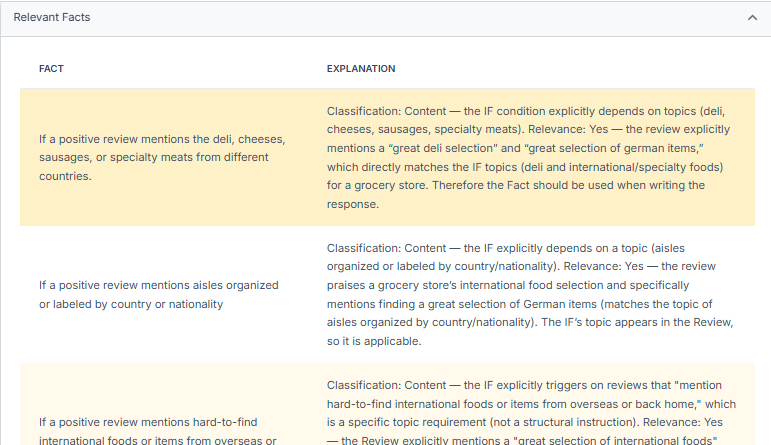
The AI review responder uses approved company, brand, and location Messages. It analyzes the review, determines whether relevant business knowledge would help, plans the response, writes it, and checks the result against configured rules. Staff can see the relevant candidate Messages and those selected for the reply and can correct the business information or edit the finished reply. A useful Message is omitted when it does not belong.
A relevant business detail can make a reply more useful to prospective customers. Suppose a repair-shop reviewer praises a clear explanation of the work, and the shop has approved a Message stating that estimates include digital inspection photos. An illustrative reply could say: “We’re glad the explanation helped. We include digital inspection photos with estimates so customers can see what needs attention before deciding on repairs.” The added detail explains the shop’s process. The same Message would not answer an unrelated billing complaint and should be omitted there.
View full-size image (opens in a new tab)
Response handling is also part of the purchase. Teams can configure star-rating and text-based publication rules, delays, and active hours, and hold or edit responses. On plans that include updated-review tracking, the system compares the changed review with the original review and response before planning a new reply. Direct response publishing is supported for Google. Monitoring other review sources does not establish direct publishing to each one.
Customer Feedback, Competitor Topics, and Local Rank Visibility
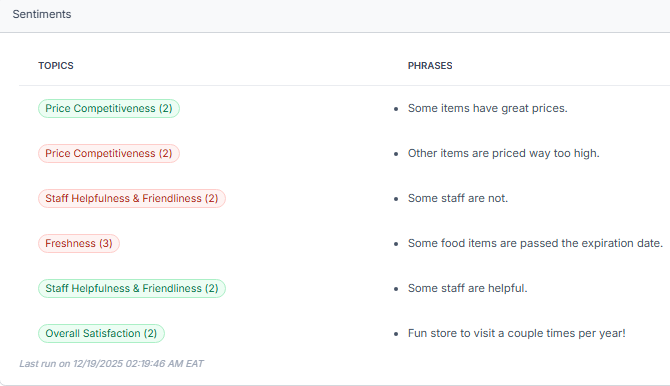
Customer-feedback analysis separates comments about particular experiences. A review can praise a technician and criticize a long wait; a single overall star rating would not preserve that distinction. Teams can modify or supply the topics used, inspect the phrases and underlying reviews, compare locations or periods, and investigate a negative topic even when the overall rating is positive. Plan eligibility matters: Core provides a basic dashboard, while teams requiring advanced topic and analysis controls need to compare the eligible plans.
View full-size image (opens in a new tab)
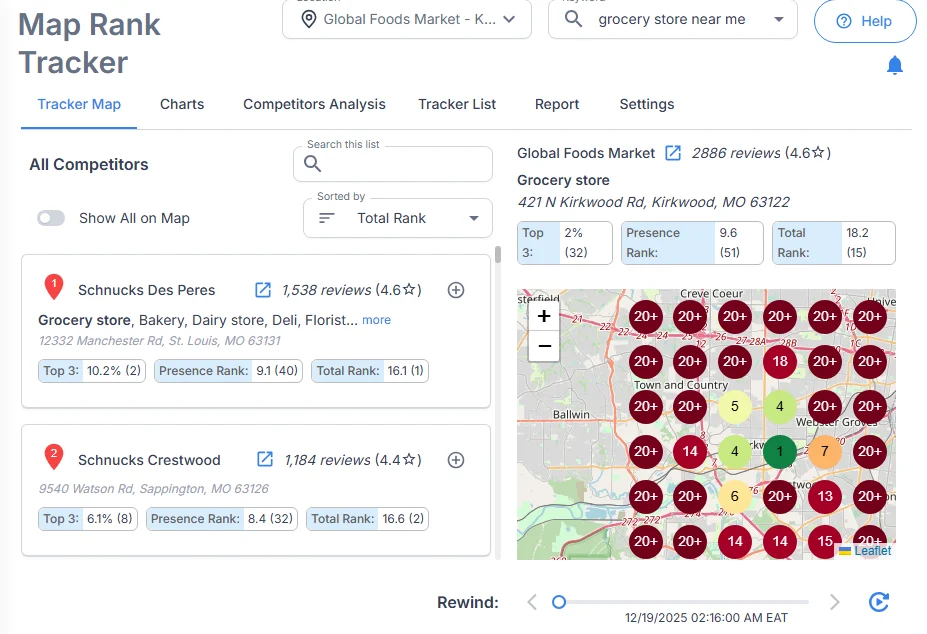
Pro includes competitor comparisons; Pro+ adds competitor customer-feedback analysis. That distinction matters when the question changes from “How many reviews does the nearby shop have?” to “What do its customers praise or criticize about communication, waiting, or value?” Claims about those experiences should remain traceable to the comments behind a summary.
The Map Rank Tracker shows rankings at points around a location for a chosen search and retains earlier scans. Staff can investigate the businesses detected at those points and compare consistent areas over time. It measures geographic visibility; it does not establish that a particular reply caused a visit, a ranking change, or a sale.
View full-size image (opens in a new tab)
Requests, Reminders, and Daily Administration
Review requests can use customer or job information supplied through supported inputs such as a connected Sheet, Zapier, or manual entry. Eligible plans support AI-written wording, photos, guiding questions, and reminders. Templates remain useful when a business needs a simpler invitation. Location mapping and sending schedules must reflect the customer’s actual experience.
Reminder limits vary by plan: Core includes two follow-ups per campaign, Pro four, and Pro+ ten. Employee QR and request-link activity can help a team investigate outreach, but a click or scan alone does not prove that a review was posted or identify a causal effect on revenue. Confirm the current attribution and integration behavior in the required plan.
Pricing, Monthly Allowances, and Plan Boundaries
| Plan | Monthly price per location | Included reply/request capacity | Maps and competitor work | Buyer fit |
|---|---|---|---|---|
| Core | $19 | 100 responses; 1,000 email requests; basic dashboard and request templates | Maps and competitor analysis excluded | Google-review replies, template email requests, and a basic dashboard; Maps, competitor analysis, and advanced topic tools are excluded. |
| Pro | $29 | 200 responses; 2,000 email requests; 200 SMS segments; eligible AI request features | 10 combined map scans or competitor analyses per location/month | Review work with feedback, Maps visibility, and competitor comparisons. |
| Pro+ | $44 | 500 responses; 5,000 email requests; 500 SMS segments; higher automation and follow-up limits | 25 combined scans/analyses; competitor customer-feedback analysis | Higher volume, automation, and topic-based competitor investigation. |
| PAYGO | $10 base plus purchased credits | Eligible usage consumes credits; access to most Pro features | Eligible map/competitor usage consumes credits | Variable usage where the business budgets for both subscription and activity. |
The published pricing and feature table should be checked for the exact source coverage, analysis tools, request controls, and add-ons required. Monthly allowances pool across account locations. Pro’s ten and Pro+’s twenty-five cover map scans and competitor analyses together, not a separate allowance for each. Additional usage packs, SMS registration, numbers, and delivery can affect the total. Annual subscriptions and custom enterprise arrangements have their own scope.
The tradeoff: the focused subscription can suit a business that already has a receptionist, website, messaging, booking, and invoicing. Those functions need to be retained or sourced separately when replacing Podium. Podium also writes AI-assisted review responses and manages customer conversations. The meaningful comparison is the information each reply adds, the controls staff can inspect and the review or local-visibility work included.
What to verify: use the same mixed review, changed review, and approved business facts in each demonstration. Inspect what was selected, what can publish, and how an exception reaches a person. Then compare the actual review sources, feedback tools, locations, map scans, and extra usage in the proposed plan.
2. Birdeye: Best for Coordinating Reviews and Customer Work Across Locations
Birdeye fits organizations that need central and local teams to coordinate reviews, customer follow-up, listings, and marketing. Its useful distinction is the control over how work moves between people and automated steps. The required products and setup determine how much of that wider platform a buyer actually receives.
The Review Response Agent guide describes a workflow triggered by a new or updated review. Triage checks for spam or irrelevant content; a branch can send an internal alert instead of continuing to write a reply. Review analysis identifies topics, sentiment, severity, language, staff mentions, and other information that can guide generation.
Business category, services, products, and description supply additional context. Teams can configure separate template, autonomous, suggested-reply, or human-approval approaches. Run test exposes the inputs and outputs of the configured steps, including response reasoning. That lets a manager investigate why a reply was produced and change the configuration.
The workflow can extend beyond writing a public reply. Birdeye documents creating a service ticket from a review, assigning it to a team member, and changing its status. A review about a repeated billing problem can therefore become owned follow-up work rather than ending when a response is posted.
This breadth is most useful when several locations and departments share responsibility. It also creates administration: someone must maintain business context, configure the routes, and decide who approves or resolves the work. Listings, social, messaging, and other products should be scoped individually instead of assumed to be included in a Reviews purchase.

View full-size image (opens in a new tab)
Pricing, Tradeoffs, and What to Verify
Pricing: For budgeting, CostBench reports Starter around $299, Growth $349 and Dominate $449 per location/month (last verified August 26, 2026; checked October 21). Birdeye provides a custom quote by products, locations, and contract. Its pricing explanation says agreements are typically annual, although payment schedules vary. Include approvals, ticketing, messaging, integrations, implementation, and any retained tools in the comparison.
The tradeoff: Coordinated workflows can reduce separate handoffs, but a wider suite adds configuration and module decisions. The value depends on using those connected operations, not simply having access to more features.
What to verify: Run a mixed review and an updated review through the proposed configuration. Inspect the selected branch, business context, generated reply, required approval, and final public result. Then assign the underlying issue as a ticket and show who owns its resolution.
3. Broadly: Best for Connected Inquiry Handling and Local Marketing
Broadly fits a local business that wants inquiry answering, customer messages, a website and local marketing operated alongside review work. Its current AI Workforce positioning is broader than a standalone review-request subscription. A repair shop with limited front-desk capacity might value connected call handling and follow-up more than another dashboard for review metrics.
The AI Reputation Specialist uses business knowledge when producing replies. Its Knowledge Base accepts business-profile details, website pages, uploaded files and manual entries. Help describes an approval/editing path and draft-ready notifications for connected Google and Facebook reviews. Staff still need to maintain accurate information and verify what happens for other review sources.
The broader package also requires concrete operational tests. An AI receptionist may collect a service request, hand a call to staff or use a connected calendar; the actual purchased integration determines the action. Broadly also offers geographic local-rank reporting, so a competing product should be compared on the grids, history and investigations it supports rather than assumed to be the only Maps option.
Pricing, Tradeoffs, and What to Verify
Pricing: The Workforce pricing and historical standalone content advertises AI Workforce at $799/month, with month-to-month service and no setup or per-user fees; optional advertising is extra. Retained public pricing content recorded September 16, 2026 separately listed Reputation AI Standard at $79/month and Pro at $89/month, with automated Premium quoted. These historical standalone figures are useful context, not proof the same offer remains available. The October 21 flagship page foregrounds Workforce; confirm current standalone availability, location limits, automation and integration scope.
The tradeoff: The bundle can reduce separate front-office purchases when those tools are needed. A business already satisfied with its phone system, website and scheduling may gain less from replacing them. Knowledge-based reply generation also depends on the quality and maintenance of the connected information.
What to verify: Use the actual service-area rules, opening hours and calendar in the demo. Show a missed call, an unsuitable inquiry, a handoff and an appointment change. Separately inspect an AI review draft, approval, publication delay and a changed review; obtain the exact current package and fees.
4. Thryv: Best for CRM, Scheduling, Invoicing, and Marketing
Thryv fits local service businesses considering a wider change to customer administration and marketing. Its relevant products include customer records, scheduling, invoices and payments as well as listings, websites, campaigns and reputation tools. These capabilities sit in different products and purchased modules, including Business Center and Keap; a headline marketing-package price should not be treated as the price of the entire operating system.
The Business Center scheduling documentation illustrates the operational depth. A booking can combine up to five compatible services with one confirmation and payment request. Matching staff, location and availability determine which services fit together, and the most restrictive booking rule applies. Separate resource controls can reserve limited-capacity equipment or rooms, although that guide limits resource selection to the back office and one resource per appointment.
Follow-up can connect to that operational record. The completed-appointment campaign trigger supports the first completed meeting ever, in the month or in the quarter. This gives a business specific controls for when a configured message should run. It does not establish that AI writes a new account of each customer’s service experience.
Review responses have a different control pattern. The AI response walkthrough describes generating a suggestion from the review’s content and tone, editing or regenerating it, and clicking Post Reply. It explicitly says AI-generated replies are not posted automatically. This human release step can suit a team that wants assistance while retaining a person’s decision on every response.
View full-size image (opens in a new tab)
Pricing, Tradeoffs, and What to Verify
Pricing: Thryv’s current pricing page shows Starter at $99/month and Signature at $399/month with Monthly selected, verified October 21, 2026; Custom is quoted. These are the advertised marketing packages. Price the CRM, scheduling, invoicing, Keap, and managed services you actually require separately rather than assuming every module is included. Confirm locations, setup, migration, users, messages, payment processing, add-ons, and any annual offer. The current terms tie the commitment to the Order and purchased services; monthly billing alone does not establish cancel-anytime service.
The tradeoff: Consolidation can be valuable when customer records, appointments and financial follow-up are fragmented. A business already satisfied with its CRM, booking and invoicing systems may create more migration work and overlap than it removes. Different modules also create entitlement and setup questions that a single feature list can hide.
What to verify: Have the demonstration use the proposed modules: book and change a multi-service appointment, apply a resource limit, convert an estimate to an invoice and trigger a completed-appointment follow-up. Separately draft and publish a review reply. Confirm calendar-sync behavior, regional availability, processor fees and the actual renewal/cancellation terms.
5. Grade.us: Best for Branded Agency Review Programs
Grade.us fits agencies delivering branded review campaigns and reports across client accounts. Classic capabilities include profile administration, client/subuser access, email/SMS sequences, website displays and white-label presentation. The important buying question is which platform is being supplied: current Grade.us demo and trial paths introduce a GatherUp-powered offer, while classic feature and pricing material remains online.
In the classic workflow, an agency connects each client’s review destinations, chooses sender identity and campaign copy, imports eligible recipients or connects an integration, and checks request history. Prepared messages can use names and other supplied fields. Follow-up timing and stop behavior must be tested; a click on a request link does not prove a completed review.
The agency benefit is repeatable delivery: separate client views and branded reporting make it easier to operate a service rather than ask every client to build one. Classic direct Google/Facebook replies and broader monitoring should not be confused with direct posting to every monitored site. Nor should current GatherUp AI, Listings Hub or Review Defense be silently presented as included classic Grade.us features. The Product features and New-buyer demo should be read together before a proposal is accepted.

Pricing, Tradeoffs, and What to Verify
Pricing: The Grade.us plans page retains a classic agency benchmark of US$400/month for 10 seats, US$40 per additional seat and US$440/year for the premium branded dashboard; the page describes that dashboard as included at 100+ seats. Its newer front-page cards show $99 for one location and $60/location for 2–10, with trial/demo links leading to GatherUp and agency pricing quoted. The linked GatherUp billing selector distinguishes annual monthly equivalents ($99/$60) from monthly billing ($124/$75). Confirm which platform, billing selection, seat/location definition, messages and branding are being offered. Do not turn the legacy four-tier pricing image into a current universal rate card.
The tradeoff: Branded client delivery is a stronger reason to shortlist the classic platform than an unproven advanced reply-analysis claim. A platform transition can also change training, migration and pricing assumptions, so an attractive per-seat number is insufficient without the named account and feature list.
What to verify: Create two sample client locations, restrict one client user, enroll a test recipient and inspect follow-up suppression. Send a branded report and show who writes, approves and publishes a reply. Reconcile dashboard branding, message credits and migration responsibilities with the quote.
6. HiFiveStar: Best for A Simple Review Workflow with a Free Entry Plan
HiFiveStar fits a local owner or small team seeking straightforward review collection, replies and reusable website/social proof. Its free entry plan creates a way to inspect the workflow before paying. That does not establish that it is the lowest-cost choice for every number of locations or that every advertised communication allowance applies to every account.
Staff can prepare SMS or email invitations, import contacts, test wording and inspect sent-request history. The documented email/SMS reminder routes can follow up after three or seven days when no review is recorded. Connected event automations add field mapping and execution history; an operator still chooses a valid customer event, fixes bad data and investigates errors. QR or request links provide a separate customer-initiated route.
Reply assistance, widgets and agency branding are part of the broader product story. The current homepage illustrates copying an AI draft and opening Google to paste it, so direct publishing should be demonstrated rather than assumed. The current pricing page places AI Reply Drafts on Core, correcting the older article’s Pro-only AI claim. The current cards and older help/terms differ on automation, channel quotas and account limits; a draft is not proof of unattended publication. A business should inspect the actual purchased edition and live request destination, including what a dissatisfied customer can do.

Pricing, Tradeoffs, and What to Verify
Pricing: The current pricing page lists Forever Free at USD $0 for one location. Core is $39/month on monthly billing or $28/month equivalent billed $336/year for one location; Pro is $99 monthly or $85/month equivalent billed $1,020/year for three locations. The register’s monthly amounts come from the official page’s structured offers; the visible annual cards show the yearly commitment. Larger tiers have different location limits. The October 21 page advertises a 14-day trial with no card, followed by the Free plan; its homepage excludes texting from trial access. Older terms and captures described a paid money-back promise, so the current signup scope and refund terms should be confirmed rather than combined. Current Core cards state 500 texts/month with an extra 500 for $15; confirm applicable channel and transport charges.
The tradeoff: The simple collection/reply/proof workflow can suit a lean team. It does not remove the need for accurate customer data, privacy-aware reply review or service recovery. A free review count is not an unlimited invitation allowance, and agency or multichannel requirements may change the appropriate plan.
What to verify: Connect one required source, send a test invitation, inspect reminder history and demonstrate the live public-review options after low feedback. Draft and hold a reply, confirm who can publish it and verify the actual number of locations/users. Put conflicting quota and channel promises into the written order.
7. Swell: Best for Healthcare Feedback and Assigned Service Recovery
Swell fits healthcare groups that need patient/provider feedback to become operational follow-up. It connects review invitations and patient or employee surveys with location/provider reporting and ticketing. A dental group or specialty network investigating repeat waiting-time complaints has a different need from a local merchant replacing a general texting inbox.
The Automated workflow setup uses appointment events, location/provider mappings, conditions, templates and sending delays to initiate requests or surveys. Those fields depend on the EHR/PMS connection. Staff must maintain the source appointment status, consent and contact data; an integration catalog does not establish identical support or failure recovery for every system.
The Ticketing workflow can turn a review or survey concern into assigned work with context, status and staff follow-up. That matters because posting a reply does not resolve the underlying complaint. Public Swell material also describes AI-assisted reply approval and patient/employee experience products; the actual purchased modules and configured rules determine which parts are available. No cross-vendor output-quality or privacy test was performed for this guide.

Pricing, Tradeoffs, and What to Verify
Pricing: Swell’s Plans uses quotes by location and product; it lists 3,000 monthly texts, unlimited emails and users in its published offer. For budget context, Main Street Picks reports a starting figure around $199/month. That directory’s undated record, retained September 16 and reopened October 21, 2026, does not identify the original source, currency, included modules, location allowance or contract term. Treat it as a lower-confidence reported reference, not a current Swell quote. The actual Subscription Order Form governs the purchase; cancellation guidance asks for written notice at least 30 days before the term ends.
The tradeoff: Healthcare data and recovery workflows can justify more implementation than a simple review tool. A business mainly seeking a sales texting or phone platform should not assume Swell replaces those functions. Provider/procedure views are only as reliable as the connected records and mappings.
What to verify: Trigger a request from the actual supported practice system, inspect its provider/location destination and show a canceled event. Open a mixed-sentiment response, inspect the original feedback and create, assign and resolve a ticket. Verify clinical-data permissions, agreements, text allowances and renewal scope before connecting real patient data.
Free Option: Google Business Profile
Google Business Profile provides a no-cost way for an authorized business to read/respond to Google reviews and share a review request link. It suits a small operation that can manage the work manually and only needs the Google workflow.
It does not replace a multi-source review workspace, automated customer-event requests, shared texting, payments, phone handling, agency reports or healthcare feedback. Staff still need profile ownership, a response policy and follow-up responsibility. Free software also has an administration cost when many profiles or people are involved.
RightResponse AI vs. Podium: What Are You Replacing?
The relevant comparison starts with replacement scope. RightResponse AI can be shortlisted first for focused reputation work when its approved-message and investigation tools fit the job. Podium remains a different purchase when its wider operating workflow is required.
| Buying question | RightResponse AI | Podium |
|---|---|---|
| Primary fit | Focused review requests/replies, eligible topic and competitor analysis, and geographic Maps investigation | Customer conversations, review work, lead/industry operations and payments |
| Inputs and controls | Approved company/brand/location Messages; selected candidate information, plan and output checks; eligible release rules | Inspect the proposed review configuration separately from the AI Employee conversation playbooks |
| What stays separate | General phone/inbox, payment collection and operational booking | Exact industry modules, AI products, usage and connected systems determine the purchased scope |
| Price basis | Core $19, Pro $29, Pro+ $44 per location/month on monthly billing; PAYGO $10/location/month plus credits. Core excludes Maps/competitor analysis. | Pabau reports Core $399/Pro $599 per month with annual contracts (Sept. 22, 2026); current industry scope quoted. |
| Useful side-by-side test | Same mixed review, approved facts, changed review, one customer event and one geographic search | Same inquiry, booking/handoff and payment work, then review draft and release |
A price saving should be calculated only after identifying the tools, data paths and staff work that remain. Removing a texting, phone or payment product because a review subscription is cheaper can leave a material operating gap.
Which Podium Alternative Fits the Main Buying Job?
| Main job | Suitable shortlist | Reason |
|---|---|---|
| Business-informed replies and review-topic/Maps investigation | RightResponse AI | Focused workflow with published per-location plans; eligible features and usage must be matched. |
| Coordinated locations and assigned customer work | Birdeye | Testable review response/approval branches and ticket ownership. |
| Inquiry handling and local marketing | Broadly | Connected workforce and business-knowledge tools; package and calendar scope matter. |
| CRM, scheduling and invoices | Thryv | Operational records and booking tools in separately scoped products. |
| Branded client review service | Grade.us | Agency account/campaign/reporting workflow; identify classic versus GatherUp. |
| Free entry for a simple local review workflow | HiFiveStar / Google Business Profile | Different free scopes; confirm channels and staff time. |
| Patient feedback and recovery ownership | Swell | Healthcare event/context and ticket workflow; modules quoted. |
Try the Software Before You Switch
Give each shortlisted vendor equivalent examples and judge the finished work and staff effort. These are tests for the buyer to run; this guide did not execute a controlled test across all seven products.
- Mixed and changed reviews. Supply the same praise-and-complaint example, then change it. Inspect what information the draft adds, what it omits and whether a person can hold or correct it.
- Business information. Provide a relevant approved public fact and an irrelevant one. Inspect selection and finished wording rather than judging a feature label.
- Customer event and exceptions. Use a real supported input route with test data, correct location and a canceled/duplicate event. Inspect reminders, failures and staff recovery.
- Follow-up responsibility. Assign a real concern, show the owner and determine whether resolution is recorded in this product or elsewhere.
- Scope and bill. Reconcile the demonstrated products, locations, users, credits, setup and contract with the exact written quote.
For a focused review-workflow evaluation, try RightResponse AI. The published seven-day trial includes 1,000 credits and most Pro features, with no card required; free use ends if the credits are exhausted sooner.
Questions to Ask Before Switching from Podium
- Who owns the business profiles, numbers, contact lists and reply history, and what can be exported?
- Which exact integration events and actions are supported, and who fixes mapping or delivery failures?
- Which draft, approval, delay and publication controls apply to each review source?
- What is included in the quote, and what adds setup, message, phone, location or usage charges?
- What is the signed term, renewal/notice date, cancellation process and data-exit window?
- Which services must continue in another product, and who performs that work?
How to Switch from Podium
- Inventory the work and accounts. List the profiles, connected systems, campaigns, users, phone numbers, payment workflows and renewal dates. Keep account ownership under the business’s control.
- Preserve useful data. Export permitted contacts, review/reply history, campaign configuration and reports. Verify file contents and document gaps before assuming a replacement can import them.
- Configure and test the destination. Set location mappings, approved business information, user access, integrations and release rules. Use a small test cohort and inspect errors.
- Prevent duplicate activity. Choose one active request owner per customer event and one public-reply owner per profile. Pause the old automation at the planned cutover after the new path is verified.
- Roll out and supervise exceptions. Start with one location where practical, train responsible staff and check delivery, reply accuracy and unresolved concerns before extending the rollout.
- Complete the commercial exit. Confirm notices, exports, number/domain transfers where relevant and actual end-of-service terms. Verify continued ownership and retained operational tools before closing access.
For multi-location organizations, expand the pilot only after central and local responsibilities are clear. A single-location business can apply the same checks without inventing a corporate rollout.
Further Research on Podium and Review Management
The RightResponse AI comparison library connects platform reviews, pricing analyses, alternatives and head-to-head evaluations. Use a full incumbent review when the question is whether to keep Podium, and a focused comparison when the shortlist is already down to two. Product documentation and the exact written offer remain necessary for an integration, healthcare-data or contract decision.
How We Compared the Products
RightResponse AI publishes this guide and evaluated the platforms against the same operational, pricing, and workflow criteria. Research used company websites, public help and product material, retained company dossiers and attributed marketplace/commercial price reports. Current public-page checks were performed October 21, 2026; original reported-price dates remain stated. Some older documents, screenshots and sources were retained where their date and product scope make them useful.
This is a documentation-based comparison. We did not run a controlled test of finished AI replies, privacy performance, reliability, conversion or financial outcomes across the products. “Best for” expresses supported buyer fit, not a measured overall score. A vendor statement, customer story or screenshot is not independent proof of a guaranteed outcome. Screenshots are retained illustrations with generally unknown original capture dates; current text and dated source checks govern product and price interpretation.
Where current pages conflict with retained evidence, the distinction is explained rather than silently deleting the older number. Unavailable sources and exact evidence dates are recorded in the editorial research. A business should validate the channels and operational work it actually intends to replace.
Final Verdict: Choosing the Right Podium Competitor
- Review responses, feedback investigation and local visibility: RightResponse AI combines approved business Messages, inspectable reply handling and eligible feedback/Maps tools. Pro is $29/location/month and Pro+ $44; Core is $19 with a narrower scope and PAYGO starts at $10 plus usage. Communication and payment tools remain separate.
- Broader location or business operations: Birdeye connects review work to central/local teams and tickets; Broadly combines inquiry handling and local marketing; Thryv connects customer records, appointments and financial follow-up. Birdeye has reported $299–$449/location/month benchmarks (CostBench); Broadly’s Workforce bundle is $799/month, with earlier standalone review offers discussed in its profile; Thryv’s $99/$399 marketing packages do not establish the cost of every operational module.
- Branded delivery, a free entry plan or healthcare recovery: Grade.us fits agency review programs, with a classic $400/month/10-seat benchmark and a distinct current GatherUp sales path. HiFiveStar offers a $0 plan and Core from $39 monthly or $28/month on annual billing. Swell fits healthcare feedback-to-ticket work; Main Street Picks reports around $199/month with material scope gaps, while the current vendor quote is location/module-specific.
Staying with Podium is a valid outcome when its connected conversation, lead and payment workflow continues to meet the main need. Choose the package after comparing the finished workflow, retained tools and total commitment, rather than selecting the smallest headline number.
Frequently Asked Questions
What is Podium and what does it do?
Podium connects customer conversations, review work, payments and industry-specific lead or scheduling workflows. A focused review product can replace part of that scope; phone, texting, booking and payment operations must be retained or replaced separately.
How much does Podium cost?
Podium’s current offer requires a quote. Pabau reports Core around $399/month and Pro around $599/month with annual contracts, dated September 22, 2026. These are general-platform benchmarks, not a confirmed current industry package, per-location rate or AI-inclusive quote. Products, users, locations, phones, usage, setup and renewal must be itemized.
Which Podium alternative fits business-informed AI review responses?
RightResponse AI is a supported fit for approved business Messages, inspectable reply handling and eligible feedback/Maps investigation. Pro is $29/location/month and Pro+ $44 on monthly billing. Core is $19 and excludes Maps/competitor analysis; PAYGO is $10/location/month plus purchased credits for eligible features. Birdeye and Broadly also have documented business-context reply mechanisms, so the finished drafts and controls should be compared.
What is a free Podium alternative?
Google Business Profile supports manual Google review reading, replies and request links at no software subscription cost. HiFiveStar also advertises a Forever Free plan with its own limits. Neither free offer should be treated as replacing Podium’s entire communication, payment and operating workflow.
Which Podium alternative fits healthcare feedback and service recovery?
Swell fits healthcare groups connecting practice-system events, provider/location feedback and assigned recovery work. Its current quote depends on location and modules. Main Street Picks reports a starting reference around $199/month, but its undated listing leaves currency, included modules, location allowance and term unspecified. The actual healthcare data agreement, integration and ticket workflow need verification.
Which Podium alternative fits agency review programs?
Classic Grade.us supports branded campaigns, client access and reports. Its retained agency benchmark is US$400/month for 10 seats with US$40 per additional seat; premium dashboard branding has separate historical scope. Current Grade.us trial/demo paths lead to GatherUp, so a new buyer must confirm the supplied platform, billing, branding and migration rather than assume classic pricing and current GatherUp features are one offer.
Sources by Company
Principal product and commercial sources are listed below. Reported or historical prices are identified in the pricing passages; source publication dates are not replaced by the date a page was reopened.
- Podium: Review product; Home-service operating workflow; Current pricing request; Pabau reported Core/Pro pricing (Sept. 22, 2026); Historical pricing observation (Aug. 23; removal reported Sept. 2, 2026).
- RightResponse AI: AI review responder; Pricing and limits; Customer-feedback analysis; Maps and competitors; Review requests.
- Birdeye: Review Response Agent; Tickets from reviews; Pricing explanation; CostBench reported prices (last verified Aug. 26, 2026).
- Broadly: Workforce pricing and historical standalone content; AI Reputation Specialist; Knowledge Base; Local SEO.
- Thryv: Current marketing packages; AI review-response walkthrough; Business terms.
- Grade.us: Plans and retained classic offers; Product features; New-buyer demo; GatherUp billing selector.
- HiFiveStar: Pricing; Help center; Current homepage and trial scope.
- Swell: Plans; Automated workflow setup; Ticketing; Main Street Picks reported starting price (undated).
- Google Business Profile: Reviews, replies and request links.