The 7 best REVIEWS.io alternatives in 2026 are RightResponse AI for location-based review replies, feedback analysis and Google Maps tracking; Birdeye for coordinated multi-location review and customer work; Podium for customer conversations and connected booking; Trustpilot for public brand-review credibility; Judge.me for Shopify product-review collection at a flat entry price; Okendo for Shopify product proof and connected customer programs; and GatherUp for agency-operated public and private feedback.
REVIEWS.io connects purchase-linked company and product reviews to storefront widgets, shopper media, Google-related ratings and marketing/support tools. This guide covers two purchases: replacing that ecommerce proof system, and managing a local business’s public reputation. For a Shopify merchant whose priority is catalog reviews, Judge.me and Okendo are the more direct replacements. A local responder does not replace product widgets, SKU mapping or retail syndication.
This guide compares the daily work, limits, prices and replacement scope of the alternatives. It uses company research, product documentation and attributed pricing evidence; current checks were made October 21, 2026. Older reported prices retain their original dates and offer scope.
Quick Verdict: Which REVIEWS.io Alternative Fits Your Business?
Choose by the work that must continue after a switch. The three groups below answer different buying needs:
- Best for local-review replies, feedback evidence and geographic visibility: RightResponse AI supplies those jobs on eligible plans, with Pro $29/location/month and Pro+ $44 on monthly billing. Core is $19 with a narrower Google-review/basic-dashboard scope and no Maps/competitor tools; PAYGO is $10 plus purchased usage. It is a focused local-reputation option, not a substitute for REVIEWS.io’s full ecommerce collection and display loop.
- Best for ecommerce proof or a public trust destination: Judge.me has free review collection and an Awesome plan at USD $15/month per store. Okendo Reviews starts free up to 50 orders/month, with paid order tiers from $19/month. Trustpilot offers a free business plan and advertised paid offers from $99/$319/$799 per domain/month, billed annually; product and location modules require their own scope.
- Best for wider customer operations or an agency program: Birdeye connects reviews to configured follow-up and location teams (CostBench reported ~$299–$449/location/month; actual quote varies). Podium serves texting and supported booking (Pabau reported Core ~$399/Pro ~$599 monthly on annual contracts). GatherUp combines requests, private feedback and client delivery: monthly $124 for one location or $75/location for 2–10, with $99/$60 annual equivalents.
RightResponse AI publishes this guide and is one of the products compared. The methodology explains the documentation-based research; the company source summary supports the claims below.
How We Evaluate REVIEWS.io Alternatives
The order reflects qualitative fit for the stated jobs, rather than a weighted score or a controlled test of finished AI replies. A product with more modules is useful only when those modules replace work the buyer actually does.
- Replacement scope: requests, replies and customer feedback versus a website, local listings, product-catalog proof, sales conversations or payments.
- Information and release controls: what guides a reply, what staff can inspect or edit, how approval works, and what happens when a review changes.
- Collection and evidence: the customer event that starts a request, location or product mapping, reminder stopping, and the comments behind a reported theme.
- Team administration: client or location permissions, ownership of customer follow-up, integrations and remaining human work.
- Total cost: the same locations, stores or domains, plan features, usage, billing period, onboarding, retained tools and renewal terms.
REVIEWS.io Alternatives at a Glance
Product-review requests, public brand reviews and Google location reviews have different destinations and price units. The table preserves those distinctions; a cheaper location plan is not a like-for-like price for storefront merchandising.
| Platform | Best for | Price and scope | Commitment and what to verify |
|---|---|---|---|
| RightResponse AI | Local replies, feedback analysis and geographic visibility | USD/location/month: Core $19; Pro $29; Pro+ $44. PAYGO $10 plus credits. Core excludes Maps/competitor work. | Monthly/annual. Seven-day/1,000-credit trial. Retain or separately replace catalog proof, UGC and syndication. |
| Birdeye | Location review governance and assigned customer work | CostBench reports Starter/Growth/Dominate ~$299/$349/$449 per location/month (Aug. 26, 2026). Current package quoted. | Typically annual; confirm products, implementation, survey/ticket scope and location permissions. |
| Podium | Customer texting, inquiry follow-up and supported booking | Pabau reports Core ~$399/Pro ~$599 per month on annual contracts (Sept. 22, 2026); current industry quote required. | Products, phones, setup, messaging and payment fees vary. This report does not establish a universal per-location unit. |
| Trustpilot | Public brand/service-review presence | Free available. Advertised USD $99 Starter/$319 Plus/$799 Premium per domain/month billed annually; Enterprise quote. | 12-month commitment; each domain priced separately. Starter eligibility, invitations, product/location modules and API are scoped. |
| Judge.me | Shopify product-review collection and proof | Reviews Free $0; Awesome USD $15/month per store. Unlimited review requests/reviews do not mean unlimited every feature. | Awesome trial 15 days; advanced requests/AI/integrations have gates. Separate Email app and external transport have their own costs. |
| Okendo | Shopify product proof and customer programs | Reviews Free up to 50 orders/month; Essential USD $19 up to 200; Growth $119 up to 1,500; Power $299 up to 3,500. Annual totals $204/$1,308/$3,288. | Reviews plans, not prices for every suite app. Retained Smart Bundle benchmarks:390/509/789 monthly, historical and currency unconfirmed; confirm bundle quote. |
| GatherUp | Public/private feedback and branded agency delivery | Monthly $124 one location/$75 per location for 2–10; annual equivalents $99/$60. Agency quote. | Trial 14 days. Verify branding, feedback, connected sources and credits; separate Listings Hub$40/location/month. |
Why Do Businesses Look for REVIEWS.io Alternatives?
Some merchants want a simpler flat-priced product-review app. Others need structured customer attributes, a public brand-review destination, different marketing integrations or clearer usage tiers. A local business may instead need controlled Google replies, customer-experience investigation and geographically consistent rank scans. The primary job determines which alternatives deserve a demo.
- Storefront proof: maintain correct products, variants, verified-source labels, media permissions and mobile widgets. Losing SKU relationships can be more disruptive than moving the review text.
- Feedback and replies: compare the data used, supporting comments, public/private release and the plan that includes AI or analysis. REVIEWS.io already offers these features in specified plans.
- Location or customer operations: a shared review queue, owned service ticket, customer inbox or booking flow is a different job from displaying product reviews.
- Commercial clarity: compare actual invite volume, stores/domains, billing channel, feature entitlements, add-ons and cancellation terms.
When REVIEWS.io May Still Be the Right Choice
REVIEWS.io remains relevant for a merchant whose requests, product/company reviews, media, widgets and connected marketing/support actions already work together. Its existing research documents order/product association, structured attributes, conditional feedback questions and review data passed into tools such as Klaviyo and Gorgias. Those controls can be more important than replacing one AI feature.
The subscription guide places AI summaries and competitor analysis in Grow, and AI-generated replies, API access and shoppable UGC in Plus. UGC Publish describes choosing approved images, configuring the gallery and assigning categories to pages. That is a merchandising workflow to retain or demonstrate in a replacement, not merely a review-count feature.
REVIEWS.io Pricing: Preserve the Billing Channel and Conflicts
The official help and retained direct-site presentation differ, while Shopify has its own offer. The following are separate price records, not a single combined range. Confirm the plan shown in the actual account before ordering or migrating.
| Source and timing | Price basis | Important scope |
|---|---|---|
| Official subscription help, Sept. 4,2026; reopened Oct. 21 | USD/month: Essentials 29; Start-Up 79; Grow from 175; Plus 500. Annual 20% saving advertised. | Monthly invites 300/1,000/1,000/7,500 respectively; plan-specific features. |
| Retained direct pricing presentation recorded Sept. 16,2026 | USD 29/99/299/499 monthly in retained siteHTML. | Conflicts with help names/quotas/billing labels; the route could not be reopened in this check. Do not silently erase the dated offer or treat it as a current quote. |
| Shopify listing, checked Oct. 21,2026 | Separate Free 25 invites; Launch USD 19/50 invites; Launch Plus 45/500 monthly. | Channel-specific offer,14-day paid trial; compare actual entitlements and external charges. |
| Modern Metal Detectors customer report, edited Aug. 19,2026 | About USD 63/month, roughly 758/year for a reported direct StartUp subscription. | One merchant’s experience, paid outside Shopify; not a universal tariff or proof every plan includes a 5,000-invite campaign. |
Sources: official subscription help, direct pricing route and Shopify offer/customer reports. The retained figures make the commercial differences visible; the proposed subscription still needs a named channel, invite quota, feature set and term.
1. RightResponse AI: Best for AI Review Responses, Feedback Analysis, and Google Maps Tracking
RightResponse AI fits businesses seeking a focused review workflow alongside existing communication or operational tools. It combines review responses and requests with customer-feedback analysis, competitor investigation, and Google Maps rank tracking on eligible plans. Its distinction is inspectable use of approved business information alongside feedback and local-visibility tools, with published per-location pricing.
Context-Aware Replies Using Approved Business Messages
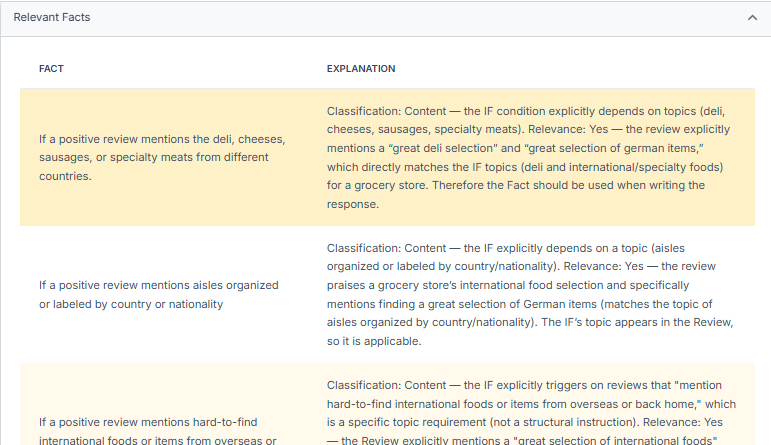
The AI review responder uses approved company, brand, and location Messages. It analyzes the review, determines whether relevant business knowledge would help, plans the response, writes it, and checks the result against configured rules. Staff can see the relevant candidate Messages and those selected for the reply and can correct the business information or edit the finished reply. A useful Message is omitted when it does not belong.
A relevant business detail can make a reply more useful to prospective customers. Suppose a repair-shop reviewer praises a clear explanation of the work, and the shop has approved a Message stating that estimates include digital inspection photos. An illustrative reply could say: “We’re glad the explanation helped. We include digital inspection photos with estimates so customers can see what needs attention before deciding on repairs.” The added detail explains the shop’s process. The same Message would not answer an unrelated billing complaint and should be omitted there.
View full-size image (opens in a new tab)
Response handling is also part of the purchase. Teams can configure star-rating and text-based publication rules, delays, and active hours, and hold or edit responses. On plans that include updated-review tracking, the system compares the changed review with the original review and response before planning a new reply. Direct response publishing is supported for Google. Monitoring other review sources does not establish direct publishing to each one.
Customer Feedback, Competitor Topics, and Local Rank Visibility
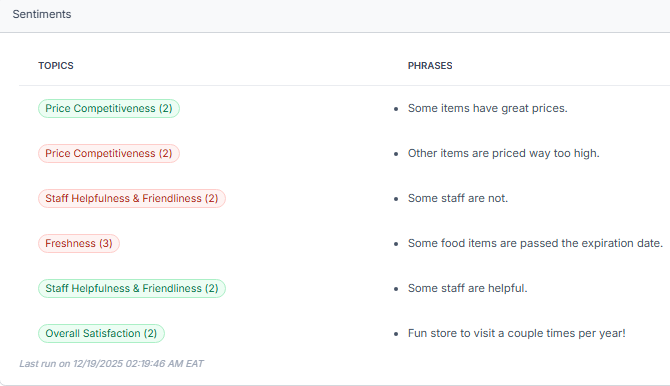
Customer-feedback analysis separates comments about particular experiences. A review can praise a technician and criticize a long wait; a single overall star rating would not preserve that distinction. Teams can modify or supply the topics used, inspect the phrases and underlying reviews, compare locations or periods, and investigate a negative topic even when the overall rating is positive. Plan eligibility matters: Core provides a basic dashboard, while teams requiring advanced topic and analysis controls need to compare the eligible plans.
View full-size image (opens in a new tab)
Pro includes competitor comparisons; Pro+ adds competitor customer-feedback analysis. That distinction matters when the question changes from “How many reviews does the nearby shop have?” to “What do its customers praise or criticize about communication, waiting, or value?” Claims about those experiences should remain traceable to the comments behind a summary.
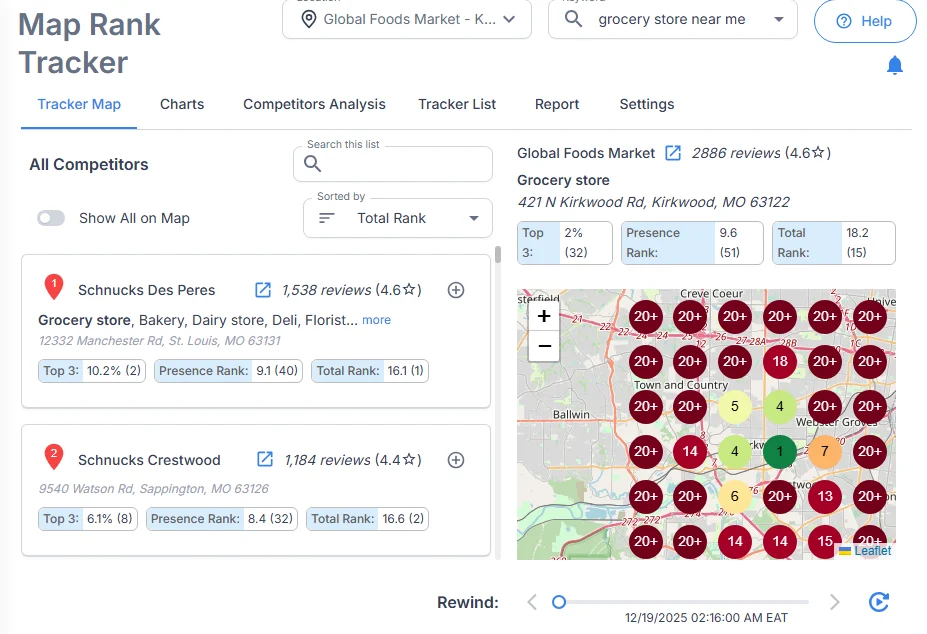
The Map Rank Tracker shows rankings at points around a location for a chosen search and retains earlier scans. Staff can investigate the businesses detected at those points and compare consistent areas over time. It measures geographic visibility; it does not establish that a particular reply caused a visit, a ranking change, or a sale.
View full-size image (opens in a new tab)
Requests, Reminders, and Daily Administration
Review requests can use customer or job information supplied through supported inputs such as a connected Sheet, Zapier, or manual entry. Eligible plans support AI-written wording, photos, guiding questions, and reminders. Templates remain useful when a business needs a simpler invitation. Location mapping and sending schedules must reflect the customer’s actual experience.
Reminder limits vary by plan: Core includes two follow-ups per campaign, Pro four, and Pro+ ten. Employee QR and request-link activity can help a team investigate outreach, but a click or scan alone does not prove that a review was posted or identify a causal effect on revenue. Confirm the current attribution and integration behavior in the required plan.
Pricing, Monthly Allowances, and Plan Boundaries
| Plan | Monthly price per location | Included reply/request capacity | Maps and competitor work | Buyer fit |
|---|---|---|---|---|
| Core | $19 | 100 responses; 1,000 email requests; basic dashboard and request templates | Maps and competitor analysis excluded | Google-review replies, template email requests, and a basic dashboard; Maps, competitor analysis, and advanced topic tools are excluded. |
| Pro | $29 | 200 responses; 2,000 email requests; 200 SMS segments; eligible AI request features | 10 combined map scans or competitor analyses per location/month | Review work with feedback, Maps visibility, and competitor comparisons. |
| Pro+ | $44 | 500 responses; 5,000 email requests; 500 SMS segments; higher automation and follow-up limits | 25 combined scans/analyses; competitor customer-feedback analysis | Higher volume, automation, and topic-based competitor investigation. |
| PAYGO | $10 base plus purchased credits | Eligible usage consumes credits; access to most Pro features | Eligible map/competitor usage consumes credits | Variable usage where the business budgets for both subscription and activity. |
The published pricing and feature table should be checked for the exact source coverage, analysis tools, request controls, and add-ons required. Monthly allowances pool across account locations. Pro’s ten and Pro+’s twenty-five cover map scans and competitor analyses together, not a separate allowance for each. Additional usage packs and SMS delivery can affect the total. The published US/Canada SMS table lists a one-time $25 registration fee and monthly phone-number fees of $4 toll-free or $3 for 10DLC; confirm any additional campaign or carrier charges. Annual subscriptions and custom enterprise arrangements have their own scope.
The tradeoff: This is a focused local-reputation purchase. It does not replace REVIEWS.io’s product-catalog reviews, SKU-linked widgets, shoppable UGC or retail syndication. A merchant may need both a commerce-review platform and a separate local-review operation; an available connector between them should not be assumed.
What to verify: use the same mixed review, changed review, and approved business facts in each demonstration. Inspect what was selected, what can publish, and how an exception reaches a person. Then compare the actual review sources, feedback tools, locations, map scans, and extra usage in the proposed plan.
2. Birdeye: Best for Coordinating Reviews and Customer Work Across Locations
Birdeye fits organizations that need central and local teams to coordinate reviews, customer follow-up, listings, and marketing. Its useful distinction is the control over how work moves between people and automated steps. The required products and setup determine how much of that wider platform a buyer actually receives.
The Review Response Agent guide describes a workflow triggered by a new or updated review. Triage checks for spam or irrelevant content; a branch can send an internal alert instead of continuing to write a reply. Review analysis identifies topics, sentiment, severity, language, staff mentions, and other information that can guide generation.
Business category, services, products, and description supply additional context. Teams can configure separate template, autonomous, suggested-reply, or human-approval approaches. Run test exposes the inputs and outputs of the configured steps, including response reasoning. That lets a manager investigate why a reply was produced and change the configuration.
The workflow can extend beyond writing a public reply. Birdeye documents creating a service ticket from a review, assigning it to a team member, and changing its status. A review about a repeated billing problem can therefore become owned follow-up work rather than ending when a response is posted.
This breadth is most useful when several locations and departments share responsibility. It also creates administration: someone must maintain business context, configure the routes, and decide who approves or resolves the work. Listings, social, messaging, and other products should be scoped individually instead of assumed to be included in a Reviews purchase.

View full-size image (opens in a new tab)
Pricing, Tradeoffs, and What to Verify
Pricing: For budgeting, CostBench reports Starter around $299, Growth $349 and Dominate $449 per location/month (last verified August 26, 2026; checked October 21). Birdeye provides a custom quote by products, locations, and contract. Its pricing explanation says agreements are typically annual, although payment schedules vary. Include approvals, ticketing, messaging, integrations, implementation, and any retained tools in the comparison.
The tradeoff: Coordinated workflows can reduce separate handoffs, but a wider suite adds configuration and module decisions. The value depends on using those connected operations, not simply having access to more features.
What to verify: Run a mixed review and an updated review through the proposed configuration. Inspect the selected branch, business context, generated reply, required approval, and final public result. Then assign the underlying issue as a ticket and show who owns its resolution.
3. Podium: Best for Texting, Lead Follow-Up, and Booking
Podium fits a business whose main problem is moving customer inquiries toward appointments and paid work. Texting, calls, website leads, reviews, and payments sit within a broader customer-conversation operation. The right comparison is the purchased industry workflow and the systems it connects, rather than a generic promise that an AI can book everything.
Its reviews product describes automated textable invitations and reminders, customer-linked review information, and an AI Reputation Specialist that generates invitations and replies. Those capabilities can keep review work connected to the same customer journey. Buyers should have the review-specific information inputs, editing, and release settings demonstrated separately from the AI Employee's sales-conversation controls.
For the wider lead workflow, Podium's AI Studio explanation describes configuring instructions and playbooks, simulating conversations, and using feedback to revise behavior. A team can test a routine question and a request that needs staff attention before enabling the workflow.
The current home-service FSM offers a concrete booking route for HVAC, plumbing, and electrical businesses: customer and job history connect to scheduling, dispatch, estimates, and payments, with Larry booking onto Podium's dispatch board using technician availability. A business keeping a different scheduler needs that integration demonstrated; native dispatch-board functionality does not prove the same behavior in every external system.
Podium Payments can place an invoice link in a text conversation, support recurring payments, and accept in-person payments through readers or phone tap-to-pay. This can matter when the same staff answer the inquiry, arrange the work, and chase payment. The current home-service offer also identifies Membership AI separately, so it should not be assumed to come with every package.
View full-size image (opens in a new tab)
Pricing, Tradeoffs, and What to Verify
Pricing: Request a current industry quote. For budgeting, Pabau’s September 22, 2026 guide reports Core at about $399/month and Pro at $599/month on annual contracts, with Signature quoted separately. These are third-party benchmarks for the general local-business platform, not a confirmed current rate for an industry product or your deployment. Include AI products, phones, messaging limits, integrations, setup, and payment fees. Podium's terms default to a 12-month term and equal renewals with at least 30 days' written non-renewal notice, unless the Subscription Documentation states otherwise.
The tradeoff: Podium is a larger operational purchase when communications and booking drive the decision. If the existing phone, CRM, and payment systems already work, replacing or connecting those functions adds cost and implementation work beyond review management.
What to verify: Follow an after-hours inquiry into the exact scheduler and payment workflow. Show staff escalation, a changed appointment, and whether booking is direct or staff-approved. Obtain written limits, overages, cancellation terms, and any trial arrangement for the specific offer.
4. Trustpilot: Best for a Public Brand-Review Presence
Trustpilot fits a business that wants customers to encounter its service reputation on a recognizable public review destination as well as its own site. Reviews and the public profile are part of that purchase. It is different from installing a product-review widget entirely within a Shopify storefront.
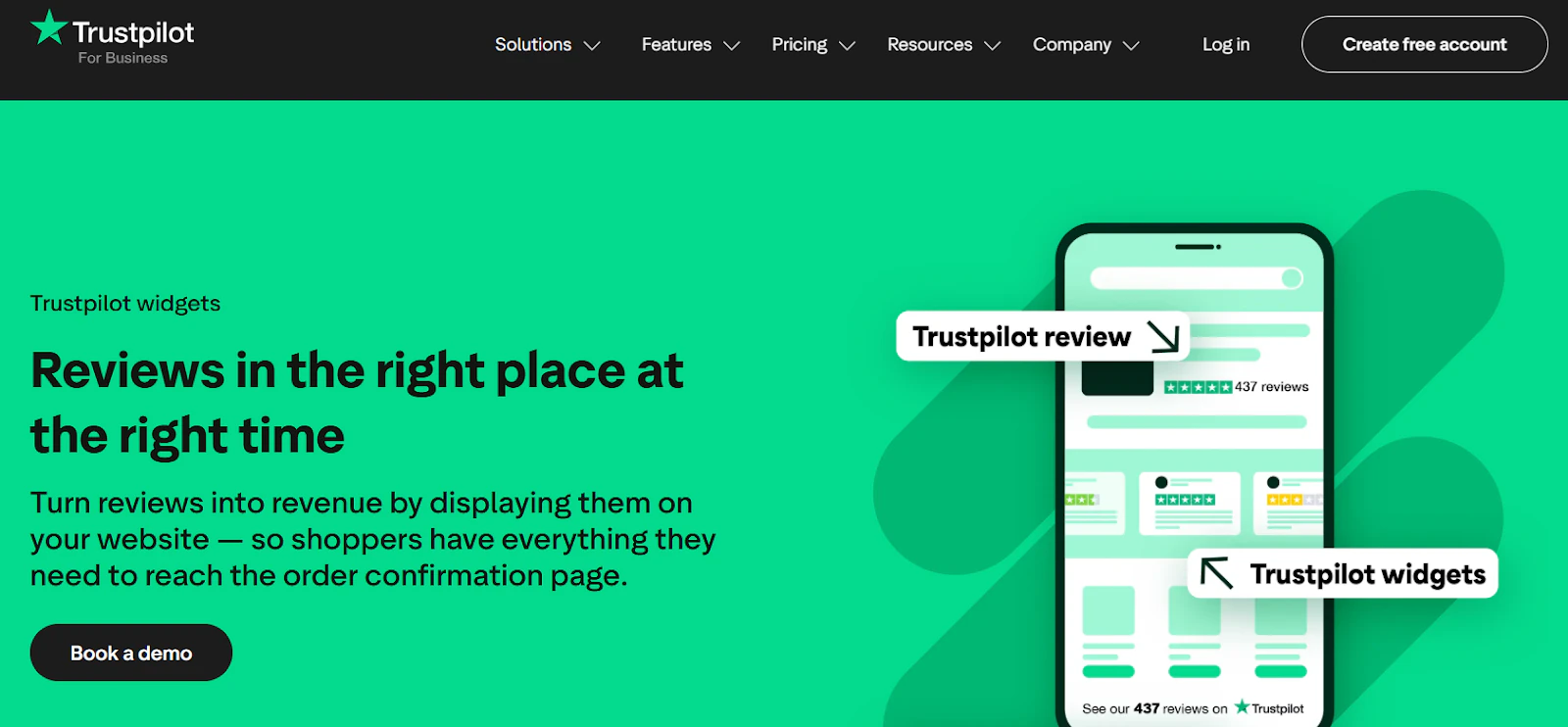
The existing research documents reusable invitation templates, event-driven requests, location mapping where purchased, review tags and plan-dependent widgets. Staff must map the customer, business domain and any location correctly. Service reviews, product reviews and physical-location records have different destinations and modules; a single base-plan price should not be assumed to buy all three.
Its service-review workflow can generate a suggested reply, let a person edit or regenerate it and require explicit posting. Public pricing places AI-assisted replies and some optimization tools in Enterprise. Older screenshots or articles using different plan names should not override the actual offer. A configured sign-off or standard closing is useful, but is not evidence of review-specific selection from a maintained business-fact library.
Trustpilot’s source-linked topic and review tools can help investigate customer concerns. For a procurement decision, have a relevant topic opened back to the actual reviews and inspect the purchased plan. A brand score, a widget, topic evidence and product-syndication eligibility answer different questions; none proves a causal sales or ranking result.
Pricing, Tradeoffs, and What to Verify
Pricing: The current public offer advertises USD $99 Starter, $319 Plus and $799 Premium per domain/month, billed annually, with a 12-month commitment; Enterprise is quoted. Each additional domain is priced separately. Starter is limited to new small-business customers up to $5 million revenue and includes 100 invitations/month; Plus 300 and Premium 1,000. A free plan exists with a narrower invitation/user scope. Product Reviews, locations and API add-ons require their own proposal. Retained cancellation help requires notice at least 30 days before term end for the applicable subscription; monthly invoicing does not remove the term. Confirm regional taxes, the selected agreement and module prices.
The tradeoff: A public reputation destination can strengthen the buyer’s evidence trail, but separate modules, domains and annual terms may matter more than the initial monthly equivalent. It is not interchangeable with a flat-price Shopify product-review app.
What to verify: Follow an order or service event into the correct review type and public profile, then show the actual widget, reply control and source review behind an insight. Price every domain, product/location module, integration and the applicable renewal notice.
5. Judge.me: Best for Shopify Product Reviews at a Flat Entry Price
Judge.me fits Shopify merchants who need sustained product-review collection and useful catalog proof without an order-volume-based subscription. Its free plan is a substantive product-review option, and Awesome adds advanced controls at a flat monthly price. This is a more direct ecommerce replacement than software built primarily for Google location replies.
The research documents requests scheduled from supported order events, delays, product selection and exclusion rules, and follow-up that stops after submission. Specific controls vary by plan and newer rollout. For example, delivered-event support and advanced product priorities should be confirmed rather than inferred from the unlimited request count. An external sender such as Klaviyo changes which native rules perform the work.
Widgets can show product and store reviews, ratings and customer media. Product groups and eligible cross-store syndication let related catalog items share review proof, provided the products and matching SKUs are genuinely comparable. Source attribution and source-store ownership matter. A product group is not a license to pool unrelated products under a high rating.
The reply editor supports public widget replies and private email. Awesome adds AI with optional instructions and a daily 500-generation limit; staff check and send the reply. Native bulk automatic replies are not established by an AI-drafting button. A reply notification can reach a normal email inbox without creating a shared case-management conversation in Judge.me.
Pricing, Tradeoffs, and What to Verify
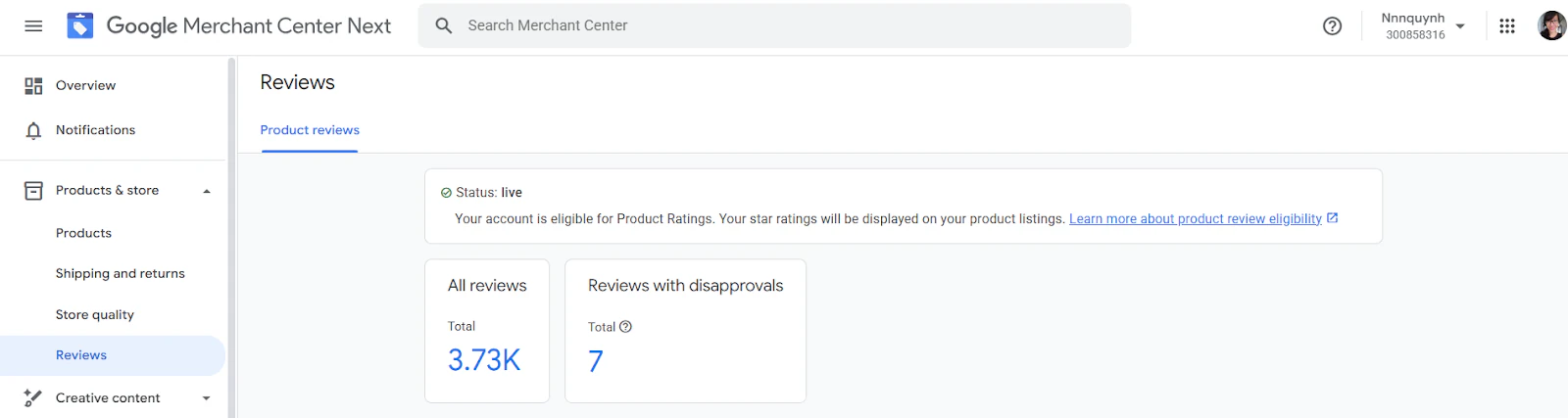
Pricing: The Shopify offer lists Reviews Free at USD $0 and Awesome at $15/month per store with a 15-day trial. Unlimited product/store reviews and requests do not make advanced templates, reminders, AI or every integration free. Cross-store Awesome entitlements and external SMS/WhatsApp providers have separate requirements. Judge.me Email is another app: retained official help lists 15,000 emails per billing period free, then USD $0.15/1,000, with its own $15/month Awesome plan. That is not extra included volume in the Reviews subscription. No annual Reviews plan is established by the checked plan help.
The tradeoff: Judge.me is focused on commerce collection and proof. Broader location listings, geographic Maps grids, customer-call handling and owned service recovery need other tools. Unlimited requests also do not remove the work of product mapping, fair collection and storefront QA.
What to verify: Use a real order with variants, a repeat customer and an excluded product. Inspect the request queue, reminder stop, source ownership after a cross-store share, widget rendering and the precise public/private reply route. Test the required AI or in-email feature on the actual plan.
6. Okendo: Best for Shopify Product Proof and Connected Customer Programs
Okendo fits Shopify and Shopify Plus teams that want product reviews to work alongside structured shopper data, surveys, loyalty, referrals and quizzes. These are connected products with their own configuration and commercial scope. A Reviews entry price is not automatically the price of every customer-marketing program.
Its order-linked review sequences use product selection, exclusions and configured timing. Staff need to choose a meaningful customer-experience event and inspect the resulting queue. A delivery-based rule depends on the delivery data actually reaching Shopify; fulfillment and delivery should not be treated as the same event.
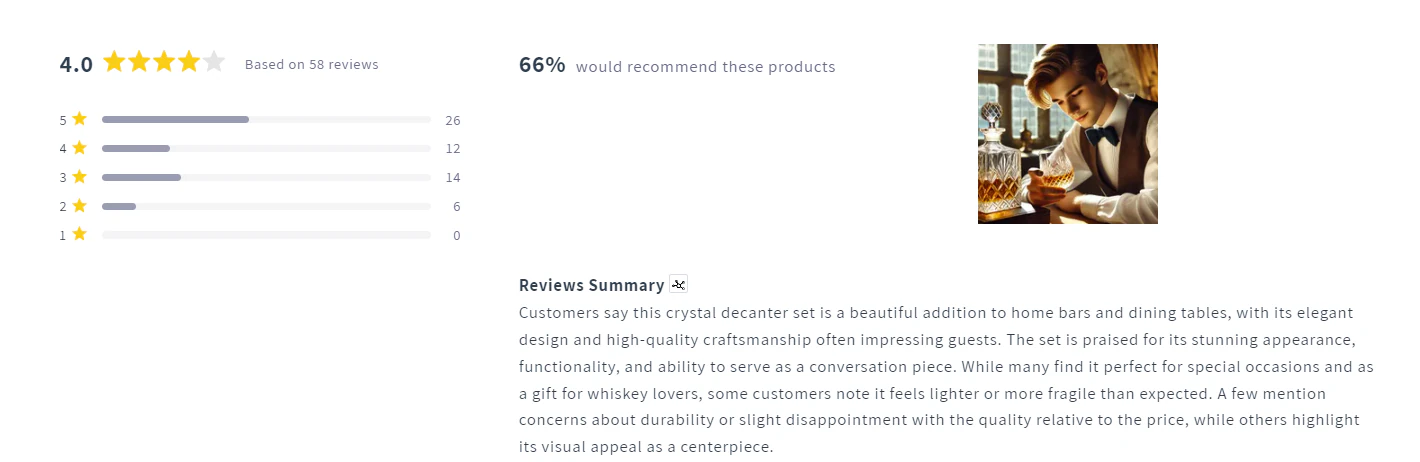
Product widgets, customer attributes and media make the proof specific to what a shopper is buying. Growth-and-above help documents AI summaries and extracted keywords with source-review inspection and release controls. A shopper-facing summary is a different object from a merchant reply; approval of one does not establish a mandatory approval process for the other.
The reply guide describes generating suggestions from the customer’s review/language and prior human replies. Staff choose public display, private email or an internal note. Growth and above can enable automatic replies with a delay and sentiment settings. This is a concrete information and release method, not proof that all replies are generic or that no competitor can personalize.
Product grouping and support-assisted cross-store arrangements can reuse appropriate proof, while the broader apps add incentive and questionnaire setup. Shopify-backed headless implementations have their own work; they should not be presented as general support for any non-Shopify backend.
Pricing, Tradeoffs, and What to Verify
Pricing: The Shopify Reviews offer lists Free up to 50 orders/month; Essential USD $19/month or $204/year up to 200; Growth $119/month or $1,308/year up to 1,500; and Power $299/month or $3,288/year up to 3,500. These are order allowances, not review caps, and not prices for all five apps. Current help lists Google Store/Seller Ratings at $99/month extra outside Enterprise. The earlier Smart Bundle image retained in this article’s research lists Attract 390, Convert 509 and Retain 789 per month, up to 3,500 orders, with a claimed 30% saving. Those are historical bundle benchmarks, with currency not visible; obtain a current named bundle quote rather than discard the figures or label them current USD rates.
The tradeoff: The connected suite is useful when the team will operate those programs. Order tiers, app choices, data properties, incentives and implementation add decisions beyond replacing a basic review widget. A local business without a Shopify commerce operation has a different requirement.
What to verify: Run the same order and product group through collection, then inspect the source reviews for a summary and the separately configured reply release. Price the actual order tier, stores, Google ratings add-on, suite apps, implementation and support-assisted syndication.

7. GatherUp: Best for Review Requests, Private Feedback, and Agency Programs
GatherUp fits businesses and agencies that want a repeatable review and customer-feedback program. It combines requests, first-party surveys, public-review monitoring, response tools and website review displays, with agency branding and multi-location options. Its published plans include monitoring across more than 100 sites, but monitoring a site does not mean a reply can be published directly to it.
The distinction between public reviews and private feedback matters. A business can collect feedback through email, SMS or a kiosk and analyze those comments alongside public reviews. The first-party feedback update describes email notifications containing suggested replies. Authorized Google and Facebook connections allow approval from that email; other connections require copying the suggestion and following the publisher link.
Its response tools should be compared as separate methods. SmartReply generates draft text, while custom prompts let an account supply brand guidance. The optional Auto Reply Templates method selects from up to 50 complete, prewritten responses for positive Google and Facebook reviews. Rating thresholds control eligibility, and this template method sends nothing if no templates have been uploaded.
Smart Insights also draws on public reviews and first-party feedback to summarize themes and sentiment. This is useful when a client needs to compare comments from customers who completed a survey with those who chose to publish a review. A meaningful demonstration should open the comments behind a theme, rather than stop at a summary chart. Agency branding and website review widgets then help an agency deliver and present the program for clients.

View full-size image (opens in a new tab)
Pricing, Tradeoffs, and What to Verify
Pricing: The current pricing selector lists one location at $124/month on monthly billing or a $99 monthly equivalent with annual billing. For 2–10 locations, the corresponding figures are $75 or $60 per location/month. It lists up to 300 SMS and 3,000 email credits per location/month and a 14-day trial. Agency pricing is quoted; Listings Hub is a separate $40/location/month add-on. Confirm currency and any extra delivery or branding costs.
The tradeoff: GatherUp is attractive when public reviews and private feedback belong in the same ongoing program. Rebuilding that program still requires customer intake, request rules, review-source connections and staff ownership; it should not be evaluated as a replacement for unrelated phone or scheduling work merely because the review subscription costs less.
What to verify: Trigger a request from the actual customer system, inspect both feedback types, and compare a generated reply with template automation. Check publisher authorization, the review drill-down behind Smart Insights, client/location access, billing cadence and any white-label fees.
For an ecommerce merchant, this is a customer-feedback and local/client-reputation program rather than a replacement for product-SKU widgets or a product-review syndication network. Its value depends on those agency or location workflows being the work the buyer needs.
Free Options: Shopify Product Reviews and Google Business Profile
Judge.me’s free plan and Okendo Reviews Free answer a product-proof question, with different volume and feature limits. REVIEWS.io also has a Shopify-only free offer. Google Business Profile instead supports manual work on the business’s Google reviews and review link. No one of these free routes replaces product catalogs, local reputation, sophisticated campaigns and every external integration at once.
RightResponse AI vs. REVIEWS.io: What Are You Replacing?
Both platforms document requests, AI and customer-feedback analysis, but their main operating contexts differ. A merchant should retain a commerce-review platform when product-specific collection, proof and distribution are the critical jobs.
| Job | RightResponse AI | REVIEWS.io |
|---|---|---|
| Primary buyer fit | Location-based public replies, investigable customer experiences and geographic Maps visibility on eligible plans. | Order-linked company/product reviews, storefront proof, customer media and connected commerce workflows. |
| Replies and evidence | Approved business Messages, inspectable selection and configured publication rules; direct Google publishing. | AI replies on Plus under current direct-plan help; confirm channel-specific release controls and inputs. |
| Customer feedback | Custom topics, supporting phrases, location/period investigation; Pro+ competitor customer-feedback analysis. | Structured attributes, surveys and plan-dependent summaries/competitor analysis; Grow/Plus feature gates matter. |
| Merchandising and distribution | Catalog widgets, shoppable UGC and retail syndication are not established replacement scope. | Product-SKU proof, galleries and supported syndication are part of the ecommerce purchase, with plan/eligibility limits. |
| Price basis | Core $19/Pro $29/Pro+ $44 per location/month; PAYGO $10 plus usage. Core excludes Maps/competitor tools. | Direct help $29/$79/from$175/$500 monthly; retained direct-site figures conflict; Shopify has separate free/$19/$45 offers. |
Which REVIEWS.io Alternative Fits the Main Buying Job?
| Main need | Relevant shortlist | Reason |
|---|---|---|
| Shopify product reviews with a flat paid entry price | Judge.me | Sustained collection, product/store widgets and Awesome controls. |
| Product proof plus shopper attributes and customer programs | Okendo | Reviews with separately scoped surveys, loyalty, referrals and quizzes. |
| A public brand/service-review destination | Trustpilot | Public profile and review proof, with domain/module terms. |
| Local replies, feedback investigation and Maps | RightResponse AI | Approved Messages and eligible local/competitor analysis. |
| Location review controls and owned issue follow-up | Birdeye | Configurable routes, approvals and customer tickets. |
| Customer conversations, supported booking and payment | Podium | Wider industry operation around the inquiry. |
| A branded local/client feedback program | GatherUp | Public/private requests, reports, widgets and agency administration. |
Try the Software Before You Switch
Give each shortlisted vendor the same examples and compare the resulting work. These are proposed buyer tests; the research for this guide did not run a matched product trial.
- Use a positive review, a mixed review and a changed review. Supply the same approved facts and inspect the draft, publication rule, correction path and final result.
- Trigger a request from the real customer system. Check consent, timing, source or product mapping, reminders and what happens after a review is posted.
- For ecommerce, test a real order with variants, product/SKU mapping, media and an excluded product. Inspect the storefront widget on mobile and the source ownership after import or sharing.
- Show Google ratings or retail syndication separately from a website widget. Confirm product/feed eligibility and which platform owns the continuing submission.
- Price the tested configuration with the same usage and staff assumptions. Ask for a written list of excluded features, add-ons, implementation and renewal terms.
Compare RightResponse AI plans and start a trial with its advertised seven-day trial, 1,000 credits and most Pro features, with no card required. Free use ends if the credits run out; compare the actual trial allowance with the work being tested.
Questions to Ask Before Switching from REVIEWS.io
- Who owns the business profiles, customer records, review history and embedded content, and what can be exported?
- Which contract requires notice, when does the current term end, and what happens to prepaid fees?
- Which requests or replies are already queued, and how will duplicate outreach or publication be prevented?
- Who will maintain integrations, permissions, business information, automation rules and customer escalations?
How to Switch from REVIEWS.io
1. Inventory the work to retain
List current campaigns, connected profiles or stores, embeds, people, integrations and renewal dates.
2. Export and check the available history
Keep the source, location or product mapping, timestamps, consent and media permissions that the new system can actually use.
3. Configure a limited pilot
Connect one business location or store where applicable, map the actual events and validate permissions without enabling duplicate campaigns.
4. Check the public result
Inspect replies, links, widgets, mobile rendering and the relevant staff handoff before expanding.
5. Cut over deliberately
Pause the old sending or publication rules, account for queued work, then enable the replacement and inspect early exceptions.
6. Train the people who own the work
Explain the approval path, source corrections, reports, request failures and escalation decisions.
7. Confirm retirement and renewal
Remove obsolete embeds or credentials only after the new workflow is working, and obtain cancellation or renewal confirmation.
Further Research on REVIEWS.io and Review Management
The comparison library connects platform reviews, pricing analyses and head-to-head guides. Use the product and help links in Sources by Company to verify the specific offer and controls rather than rely on an older screenshot.
How We Compared the Products
RightResponse AI publishes this guide and evaluated the platforms against the same operational, pricing and workflow criteria. The research reopened existing company dossiers and the shared pricing evidence register, then checked material product and commercial details against public documentation. Useful third-party, customer and historical prices are attributed and separated from current official offers.
This is a documentation-based comparison. No controlled test established a winner for writing quality, accuracy, conversion, revenue or ranking impact. The screenshots are retained vendor-interface illustrations with unestablished original capture dates; they do not certify every current control or price. Plan and regional differences are identified where they change the buying decision.
REVIEWS.io Migration: What Can Stop Working?
The current cancellation/downgrade help says reviews remain on the account, but paid widgets and reply/collection features can stop; queued requests and storefront display need attention. Retaining data on the old platform does not prove it will import into the new one with every verification, media right, product relationship or rich-result entitlement intact.
The cancellation instructions distinguish direct billing from Shopify administration and state 30 days’ notice. Record the applicable paid term and final payment before removing the app or widgets. Preserve review and media exports, map products in a pilot and inspect the new public display before retiring the old code.
Final Verdict: Choosing the Right REVIEWS.io Competitor
Judge.me and Okendo are the more direct candidates when a Shopify merchant is replacing product-review collection and storefront proof. Trustpilot serves a public brand-review purchase with its own domain and module terms. RightResponse AI fits a location-based reply, feedback and Maps requirement; Birdeye adds coordinated location/customer work, Podium wider customer communications, and GatherUp branded feedback programs. Staying with REVIEWS.io can be sensible when its catalog, media, widgets and connected workflows already fit. Choose the demonstrated replacement scope and total commercial offer, not the lowest number from unlike plans.
Frequently Asked Questions
What is the best REVIEWS.io alternative for Shopify product reviews?
Judge.me and Okendo are direct candidates. Judge.me offers free collection and a USD $15/month Awesome plan per store; Okendo adds order-tiered Reviews and separately scoped customer programs. Compare product mapping, widgets, imports, media, automation and the required integrations on actual plans.
Can RightResponse AI replace all of REVIEWS.io?
No. RightResponse AI fits local public-review replies, customer-feedback investigation and geographic Maps tracking on eligible plans. REVIEWS.io’s product-SKU collection, storefront proof, shoppable UGC and retail syndication need to be retained or separately replaced.
Does REVIEWS.io have a free plan and what do paid plans cost?
It has a Shopify-only free offer with 25 monthly invites. Official direct-plan help lists USD 29/79/from 175/500 monthly for Essentials/Start-Up/Grow/Plus; Shopify separately lists free/19/45 offers. Retained direct-site figures 29/99/299/499 conflict with help, and one customer reported about 63/month in August 2026. Preserve the channel and source context; obtain the actual named offer.
Is Judge.me unlimited and is its AI free?
Its free/paid offer advertises unlimited review requests and reviews, not unlimited access to every feature. Awesome is USD $15/month per store; AI and advanced collection/integrations have plan or availability limits. The reply guide specifies a 500-generation daily cap.
What does Okendo cost, including its historical bundle prices?
Reviews Free covers up to 50 orders/month. Essential is USD 19/month, Growth 119 and Power 299 with stated order allowances; annual totals are 204/1,308/3,288. A retained historical Smart Bundle image lists 390/509/789 per month with currency unestablished. Those broader old bundle amounts are not current all-app quotes; confirm the selected apps and tier.
How much should a business budget for Birdeye or Podium?
CostBench reports Birdeye Starter/Growth/Dominate around $299/$349/$449 per location/month, last verified August 26,2026. Pabau’s September 22,2026 guide reports Podium Core around 399 and Pro 599 per month on annual contracts. These are attributed benchmarks for different scopes; actual products, deployment and usage require a quote.
Do product-review widgets and Google Business Profile reviews do the same job?
No. Product widgets associate shopper evidence with catalog items, while Google Business Profile reviews describe a business location or service. Google product/store ratings and retail syndication have separate feeds, eligibility and product scope; a widget alone does not establish those destinations.
Will a business lose its REVIEWS.io reviews when cancelling?
Current help says reviews remain tied to the account, but website widgets, replying and new collection can stop. That retention does not establish unrestricted portability or preservation of every imported verification/media entitlement. Export what is available, test the replacement and follow the direct-billing or Shopify cancellation path with the applicable notice and term.
Sources by Company
RightResponse AI: AI review responder; Pricing and feature limits; Customer-feedback analysis; Maps and competitors; Review requests.
Birdeye: Review Response Agent; Ticket creation; Pricing and commitment; CostBench reported benchmarks, Aug. 26,2026.
Podium: Pricing; Home-service workflow; Payments; Contract terms; Pabau reported prices, Sept. 22,2026.
GatherUp: Pricing and billing selector; SmartReply; Auto Reply Templates; First-party feedback updates.
Google Business Profile: Reviews, replies, and review links.
REVIEWS.io: Subscription guide, Sept. 4,2026; Direct pricing route; retained conflicting Sept. 16 capture; Shopify channel offer and Aug. 19 customer report; UGC Publish; Cancellation and retained data; Billing-specific cancellation.
Trustpilot: Current plans; Retained AI workflow; Retained cancellation terms.
Judge.me: Shopify current offer; Plans and limits; Reply operation and cap; Separate Email plan.
Okendo: Shopify Reviews plans; Reply input and release; Summary controls; Google ratings add-on.