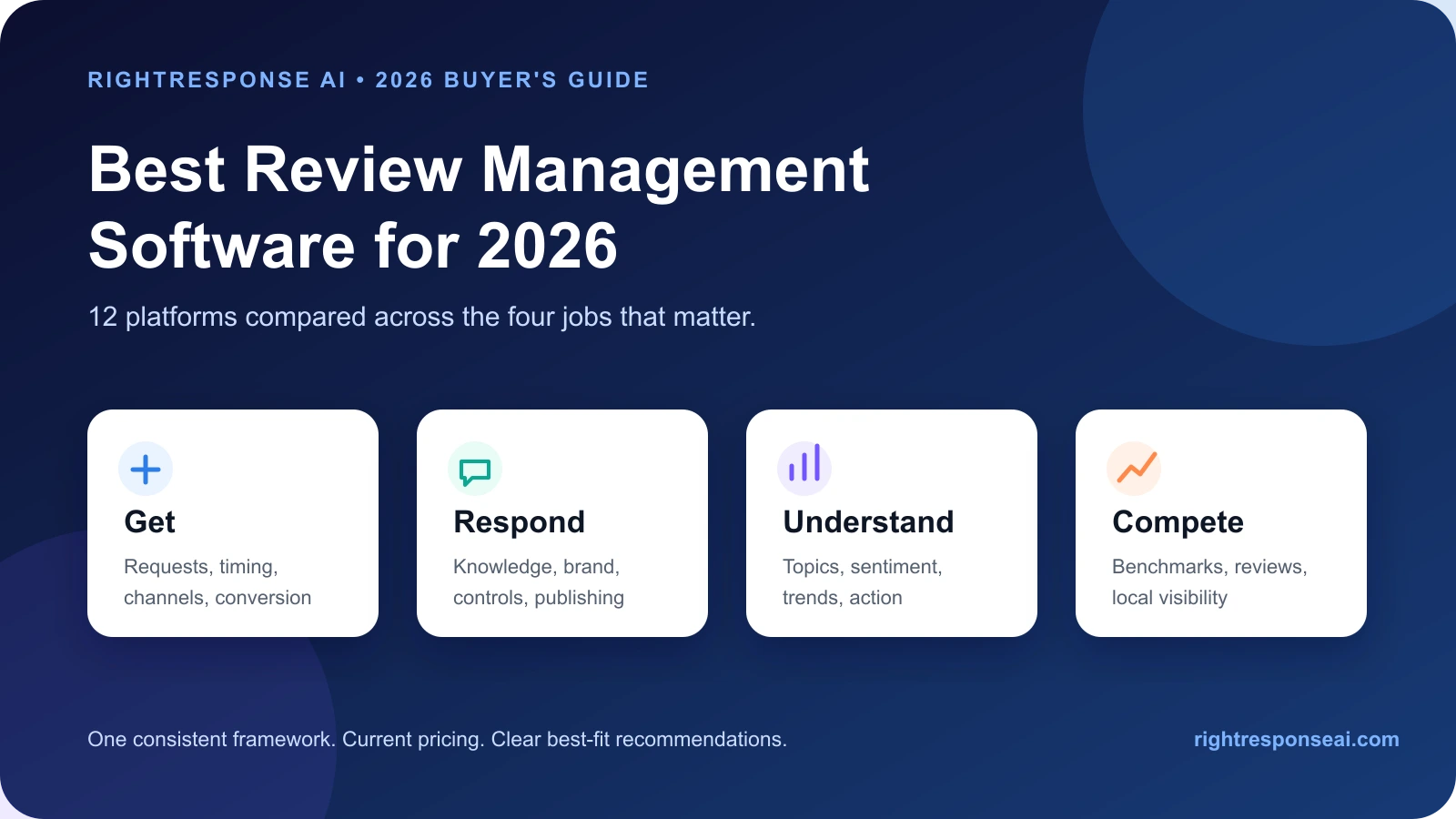
The best review management software depends on what your business needs it to do. Some platforms focus on generating more reviews. Others are built for review responses, customer communication, local SEO, enterprise governance, or customer analysis.
Comparison research: This article is part of the RightResponse AI review management software comparison library, which connects platform reviews, pricing analyses, alternatives, and head-to-head evaluations.
The review management software market has a visibility loop. Large, established platforms appear repeatedly in “best software” articles partly because their scale, longevity, and broad product sets make them obvious candidates. Each appearance makes them more likely to enter the next buyer’s shortlist and the next comparison article. That creates a self-reinforcing cycle. That visibility is meaningful evidence of market presence, but it does not prove that a platform is the best fit for every business. It can also draw attention away from less familiar companies introducing genuinely different approaches.
For a fuller view of the market, this guide compares the 12 established platforms buyers are most likely to encounter and 6 innovative or specialized platforms. These specialists may have less visibility or narrower product portfolios, but each offers a distinctive approach that could make it the better choice for a particular workflow.
As you compare products, ask whether each one helps your business get reviews, respond, understand customer feedback, and compete more effectively. Then decide whether you need a broad reputation suite, a focused review platform, or a specialist tool. We explain that choice in one suite, best-of-breed, or a focused platform. If you need the wider operating context first, read our complete guide to review management.
Quick Comparison of the Best Review Management Software
RightResponse AI is our top overall choice for businesses that want all four review-management jobs in one specialized platform. The remaining vendors are not ranked from second to twelfth; each may be the better choice for a particular business, workflow, or technology strategy. The four capability columns compare documented depth across the products in this guide. They are not a universal score of every feature or use case.
| Label | Meaning |
|---|---|
| Leading | Among the deepest documented implementations in this comparison for that job, based on workflow coverage, controls, and operating depth. |
| Strong | Substantial documented depth with a capable workflow, but less coverage or control than the leading implementations. |
| Available | A documented native capability with narrower coverage, fewer controls, or a more limited operating workflow. |
| Limited | Documented native coverage is narrow or secondary to the platform's main purpose. |
| Platform | Best for | Get | Respond | Understand | Compete | Pricing approach | Main tradeoff |
|---|---|---|---|---|---|---|---|
| RightResponse AI | One integrated system across all four jobs | Strong | Leading | Leading | Strong | $19 Core; $29 Pro; $44 Pro+; $10 PAYGO per location monthly; PAYGO also uses usage credits | A newer specialist with a smaller ecosystem than the largest incumbents |
| Birdeye | Broad enterprise and multi-location reputation programs | Leading | Strong | Leading | Leading | Custom proposal | Broad scope can bring more implementation effort and a larger contract |
| Podium | Text-led customer communication and lead conversion | Leading | Strong | Available | Limited | Custom proposal; reported estimates start near $399 monthly | Review intelligence and competitive analysis are less central |
| Reputation.com | Enterprise governance, feedback, and operating workflows | Leading | Strong | Leading | Leading | Published entry packages from $80 per location monthly | Enterprise depth may exceed a smaller team’s needs |
| ReviewTrackers | Review aggregation, analysis, and agency programs | Leading | Strong | Leading | Strong | Annual quote; reported estimates start around $89–$119 per location monthly | Pricing and scope can be harder to evaluate before a sales call |
| Grade.us | Agencies that prioritize white-label review generation | Strong | Strong | Available | Limited | $99 monthly for one location; $60 per location for two to ten | Customer intelligence and local visibility are less developed |
| GatherUp | Review acquisition, first-party feedback, and agencies | Leading | Strong | Strong | Available | $99 monthly for one location; $60 per location for two to ten on annual billing | Advanced local-rank and response architecture are less central |
| NiceJob | Small local businesses that value simple automation | Leading | Strong | Available | Available | Reviews $75 monthly; Pro $125 monthly | Less enterprise governance and analytical depth |
| BrightLocal | Local SEO teams that also need review workflows | Strong | Strong | Available | Leading | $65 monthly or $584 annually for one active location on Grow | Review response quality and operating action are not the main product focus |
| Yext | Enterprises centered on listings and business knowledge | Leading | Strong | Strong | Leading | Custom proposal | Review-specific workflows sit inside a much broader platform |
| SOCi | Large distributed brands managing local marketing | Available | Strong | Strong | Strong | Custom proposal | Enterprise breadth and contract size can exceed review-only needs |
| Uberall | Multi-location local presence and review governance | Strong | Strong | Strong | Leading | Custom proposal | Pricing is not transparent and the suite extends beyond reviews |
How We Evaluated the Platforms
We used AI citation analysis, live search research, and current best, top, ranked, and comparison articles to identify the established consideration set: the vendors buyers are most likely to encounter. That was a discovery method, not a scoring method.
This research also exposed a visibility loop. A vendor that appears frequently in existing articles is more likely to be included in future articles, cited by search and AI systems, and considered by future buyers. Repetition can reflect market scale and product breadth, but it can also reinforce the same familiar shortlist.
Frequency did not determine the winners. We checked each vendor's relevant capabilities against current product pages, documentation, support material, and available RightResponse AI research. We also researched specialists outside the established consideration set when they introduced a distinctive workflow, operating model, or use of AI. Pricing came from vendor pages when available and current market reporting when vendors require a quote.
- Define the buyer's job. We separated review acquisition, response management, customer intelligence, and competitive visibility before comparing features.
- Verify the workflow. We looked for an actual operating process, not just a feature name.
- Check the controls. Approvals, permissions, escalation, business knowledge, location context, and reporting determine whether a feature works at scale.
- Record pricing honestly. We distinguish published prices, usage pricing, custom proposals, and reported estimates.
- Name the tradeoff. Every platform profile explains who benefits most and what the buyer gives up.
The result is a ranking for these four review-management jobs, not a universal verdict. A platform with more features can still be the wrong choice when the business needs a faster setup, deeper review intelligence, more transparent pricing, stronger agency support, or a narrower specialty. Product fit also depends on whether the buyer wants one broad suite, a best-of-breed stack, or a focused integrated platform.
The Four Jobs Review Management Software Should Do
Many products called review management software solve only one part of the problem. A request tool may help generate reviews without improving response quality. A response generator may save time without learning from customer language. A local SEO platform may show rank changes while offering basic review workflows. A Voice of Customer platform may analyze feedback without helping the business earn or answer reviews.

- Get reviews
- Send relevant requests through the right channel and at the right moment. Evaluate personalization, reminders, integrations, photos or structured questions, employee attribution, and request-to-review conversion.
- Respond
- Monitor reviews and create accurate, useful responses with brand, company, and location knowledge. Evaluate approvals, escalation, automation rules, publication controls, and response quality.
- Understand
- Turn review text into topics, sentiment, trends, recurrence, and evidence that can be traced back to the original customer language. Evaluate whether teams can assign and measure action.
- Compete
- Compare ratings, volume, velocity, response activity, customer themes, and local visibility with the businesses customers also consider. Evaluate change over time, not a one-day snapshot.
One Suite, Best-of-Breed, or a Focused Platform?
The first strategic decision is not which vendor to buy. It is how you want the technology to fit together. A broad suite can simplify procurement, governance, and data sharing, but buyers may pay for functions they do not need or accept a capable rather than category-leading tool inside the bundle. A best-of-breed stack can deliver greater depth and may cost less when its scope is disciplined, but the buyer becomes responsible for integrations and operating across several systems.
| Approach | What you gain | What you give up |
|---|---|---|
| Broad suite | One vendor across reviews and adjacent functions, centralized governance, shared data, and fewer integrations. | Often a higher price and longer implementation; individual modules may provide less depth than a specialist. |
| Best-of-breed stack | The freedom to choose the strongest specialist for each important workflow and buy only what the team needs. | More vendors, integrations, contracts, and ownership; data and workflows can become fragmented. |
| Focused integrated platform | One review-specific system across the core jobs without purchasing a much broader marketing suite. | Less coverage of adjacent functions and potentially a smaller integration or services ecosystem. |
None of these models is inherently best. Choose a broad suite when consolidation and enterprise governance matter more than specialized depth. Choose best-of-breed when a few workflows are strategically important and the team can manage the connections. Choose a focused integrated platform when you want one operating system across Get, Respond, Understand, and Compete without purchasing every adjacent local-marketing function. Many organizations ultimately use a hybrid: one core platform plus a specialist where the difference is material.
The 12 Best Review Management Platforms for 2026
Each profile focuses on the buyer decision: where the platform is strongest, how its AI and operating workflow differ, what pricing is visible, and what the buyer gives up.
Jump to a platform: RightResponse AI Birdeye Podium Reputation.com ReviewTrackers Grade.us GatherUp NiceJob BrightLocal Yext SOCi Uberall
RightResponse AI: Best Overall for a Review Operating System
Best for: Businesses from one location through multi-location and agency programs that want review requests, responses, customer intelligence, competitor analysis, and map-rank tracking in one specialized system.
RightResponse AI uses a coordinated 20-agent response workflow rather than a single generic prompt. Reviews can be interpreted with the rating, language, prior review and response history, website content, and approved company, brand, or location knowledge. Routine cases can follow star-rating automation rules, while sensitive cases can be held, escalated, edited, scheduled, or marked Do Not Respond. Custom topics connect the same reviews to Voice of Customer analysis, competitor comparison, and local visibility. Its Message-Informed Review Responses use approved business messages to add useful information that was not in the review. The explanation includes a worked example and a comparison with other AI responders.
RightResponse AI connects these jobs through its Review Requester, Intelligent Review Responder, Voice of Customer analysis, and Map Rank Tracker and Competitor Analysis. Our guide to local search visibility explains the final workflow in detail. The same framework also makes it easier to see where another vendor specializes.
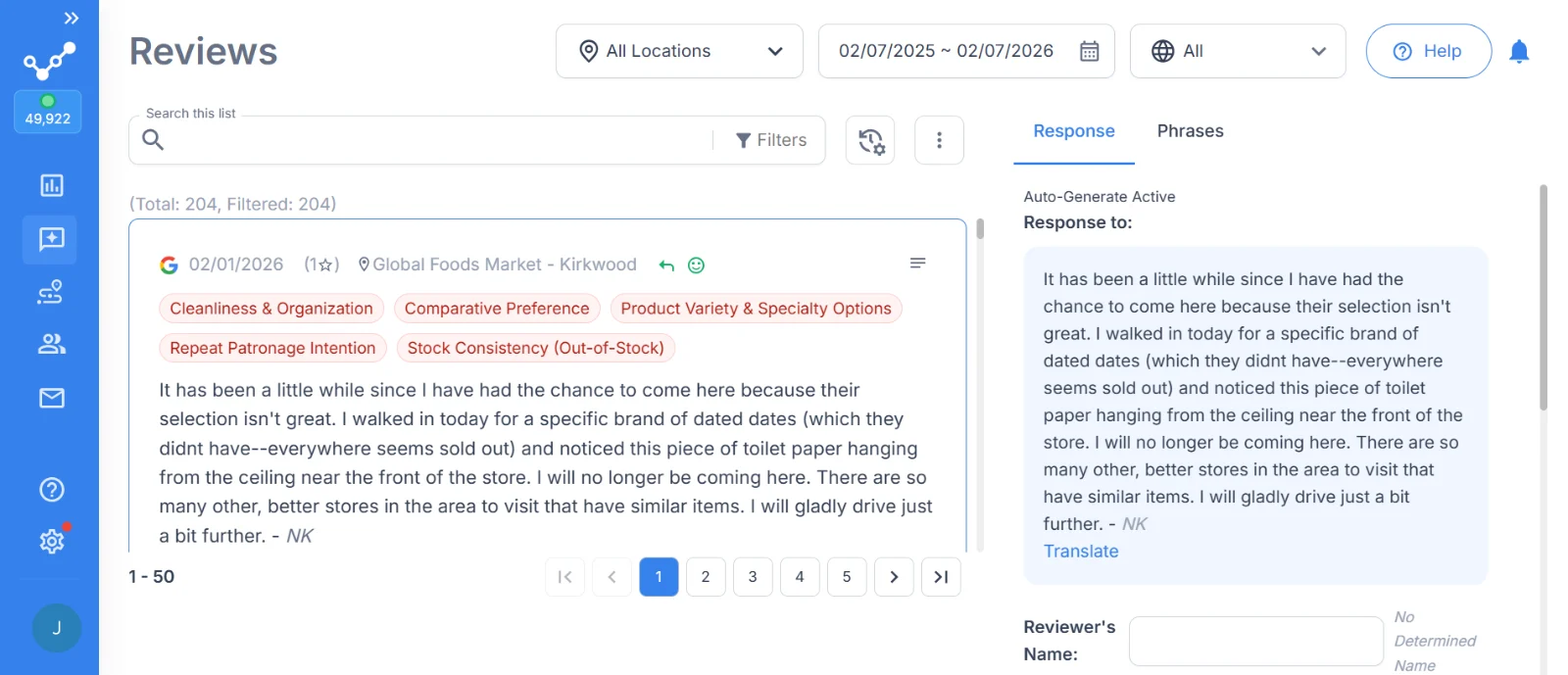
Pricing: Current RightResponse AI pricing lists Core at $19, Pro at $29, Pro+ at $44, and PAYGO at $10 per location monthly plus usage credits. Map-rank and competitor features begin at Pro, with more advanced automation and competitor Voice of Customer at Pro+.
Main tradeoff: It is a newer specialist with a smaller integration and services ecosystem than the largest enterprise suites.
Birdeye: Best for Broad Enterprise Reputation Programs
Best for: Franchises and multi-location brands that want governed review generation and response across many sites, locations, and integrations.
Visit Birdeye Read our Birdeye review
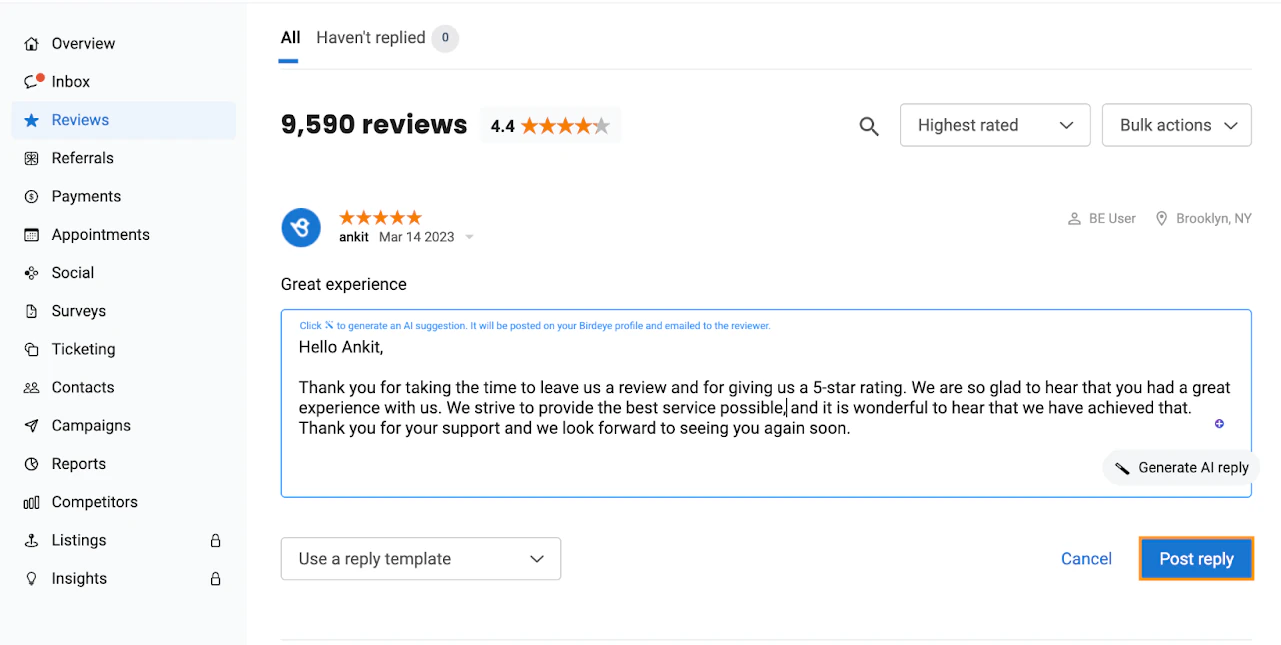
Birdeye's Review Response Agent can use review text, rating, images, sentiment, intent, customer and location context, survey history, and configured tone or compliance rules. It can triage spam, assess severity, draft multilingual replies, create tickets, route exceptions, wait for approval, or auto-publish approved cases. Birdeye also spans listings, surveys, social, messaging, and customer experience, which makes it attractive when reviews are one part of a broader enterprise program.
Pricing: Birdeye uses a custom proposal based on locations and products. Confirm modules, implementation, integrations, support, usage, and contract length before comparing the quote with a reviews-only platform.
Main tradeoff: Its breadth and governance are useful at scale, but usually require more configuration, implementation effort, and budget than a focused review workflow.
Podium: Best for Text-Led Customer Communication
Best for: Local service businesses that use SMS for lead conversion, customer communication, payments, and review requests.
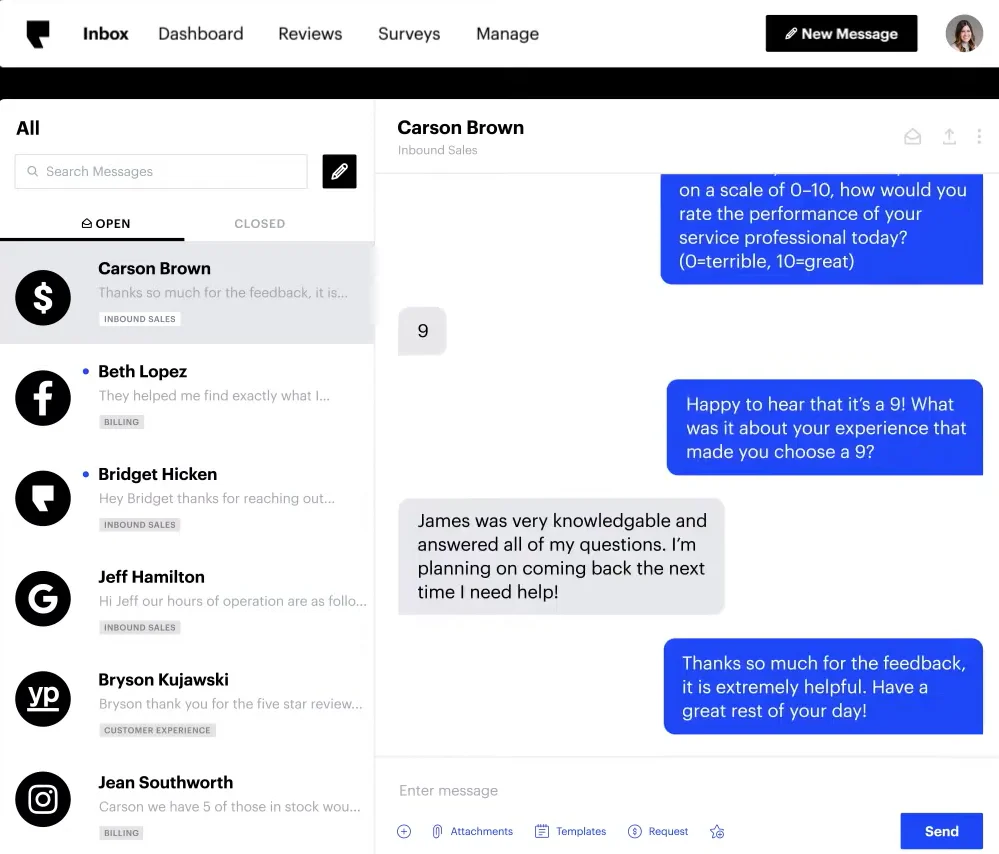
Podium's advantage is the operating channel. A completed job or transaction can trigger a text request and reminders, and reviews enter the same customer inbox used for other conversations. Its AI Reputation Specialist can draft or, depending on package and configuration, send replies. Public documentation is less detailed about brand-knowledge controls, risk routing, and approvals than the enterprise response-agent products in this guide.
Pricing: Podium uses custom proposals. Current third-party sources commonly report estimated starting prices of about $399 per month for Core and $599 for Pro, but buyers should treat those figures as reported estimates and confirm a live quote.
Main tradeoff: The communications bundle can be valuable for an SMS-heavy business and unnecessarily broad or expensive for a buyer focused only on review intelligence and response.
Reputation.com: Best for Enterprise Governance and Feedback Workflows
Best for: Enterprises that want reviews, surveys, competitive intelligence, ticketing, governance, and executive analysis across many locations.
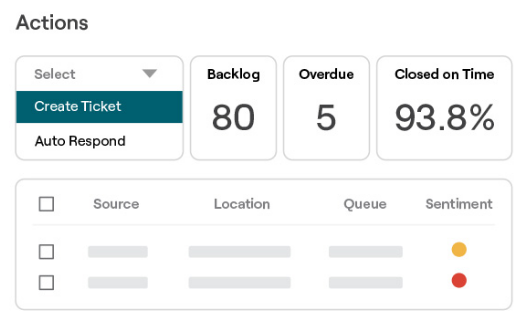
Reputation IQ can answer plain-language questions across reviews, surveys, competitive benchmarks, Voice of Customer data, and the organization's hierarchy. The response engine drafts replies, Voice of Brand evaluates alignment, and Actions can turn recurring problems into assigned tickets. That feedback-to-action path is more operational than a simple request-and-reply tool.
Pricing: Published pricing starts at $80 per location monthly for Rep Core, $115 for Core + Pulse, and $150 for Core + Surveys. Enterprise pricing is custom at 125 or more locations, and several capabilities are add-ons.
Main tradeoff: The platform is deep but modular. Buyers need to map required features and add-ons carefully before comparing a proposal with a narrower product.
ReviewTrackers: Best for Review Aggregation and Analysis
Best for: Multi-location organizations that value review aggregation, experience analytics, location comparison, and competitor intelligence.
Visit ReviewTrackers Read our ReviewTrackers review
ReviewTrackers currently lists AI Review Response in Starter and Essential, although its public product materials do not fully describe the current model, prompt controls, or publishing workflow. The broader platform adds experience analysis and competitor views for teams that want to study patterns across locations as well as answer individual reviews.

Pricing: ReviewTrackers uses location-based annual pricing across Data Only, Starter, and Essential. Dollar amounts require a quote; current third-party sources report estimated entry pricing of roughly $89–$119 per location monthly. Experience Analysis and Competitor Insights are included in Essential, while listings and local-rank tools are add-ons.
Main tradeoff: Analysis is a strength, but documented AI response is primarily assistive and several strategic functions sit in higher packaging or add-ons.
Grade.us: Best for Agency-Led Review Generation
Best for: Agencies and local SEO resellers that prioritize white-label review funnels, client dashboards, widgets, and reporting.
Visit Grade.us Read our Grade.us review
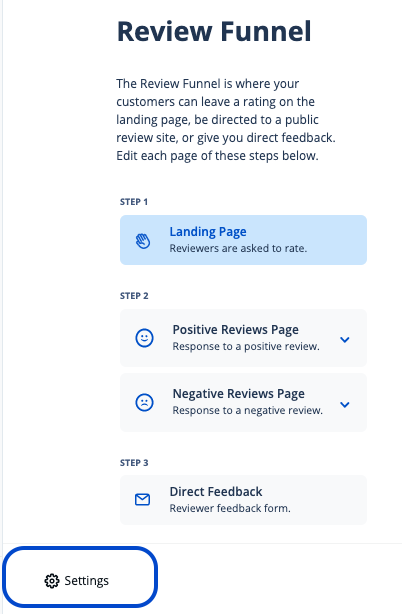
Grade.us is an established delivery system for branded domains, email campaigns, review funnels, client reporting, and multi-account administration. It is not the strongest AI story in this comparison; the current public material provides little evidence of native AI generation or advanced review analysis, and the new-demo path now routes prospects toward GatherUp's newer capabilities. Its value is the agency operating model rather than an AI superlative.
Day to day, an agency can launch a branded request campaign for a client, send customers into a configurable review funnel, and monitor results from the multi-client Command Center. The agency can keep domains, dashboards, widgets, and reports client-branded while managing multiple accounts from one workspace. That is a delivery and fulfillment advantage, not evidence of native generative-response or advanced analysis depth.
Pricing: Grade.us publishes Small Business at $99 per month for one location and Multi Location at $60 per location monthly for two to ten locations, with a 20% annual-billing discount shown on its pricing page. Agency pricing is custom. Buyers should confirm the operative package as new demo requests route toward GatherUp.
Main tradeoff: White-label delivery is mature, while current roadmap, packaging, and AI depth are less clear than the strongest modern platforms.
GatherUp: Best for Review Acquisition and First-Party Feedback
Best for: Agencies, local businesses, and multi-location teams combining review acquisition with first-party surveys, NPS, and experience analysis.
Visit GatherUp Read our GatherUp review
GatherUp's Suggested Reply can use review text, source, a custom brand prompt, and a creativity setting to create an editable response delivered in email. Smart Insights analyzes first-party feedback and third-party reviews for sentiment, topics, and suggested actions. Its safest automation path uses buyer-authored templates for qualifying positive Google and Facebook reviews rather than letting every review auto-publish from generative AI.
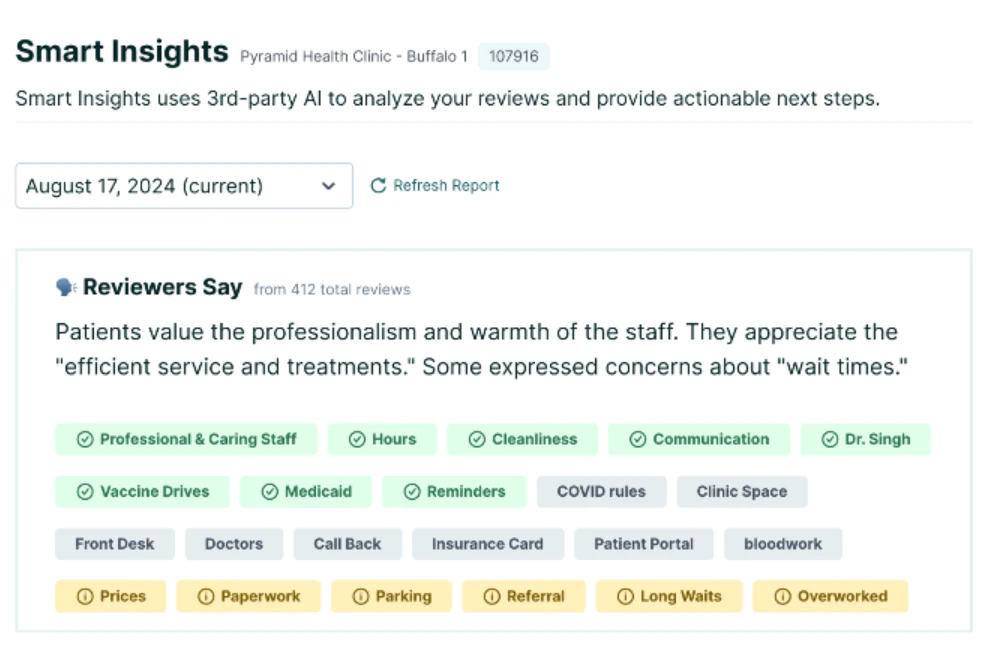
Pricing: GatherUp publishes annual-equivalent pricing of $99 per month for one location and $60 per location monthly for two to ten locations. Reported month-to-month rates are about $124 and $75 respectively. Agency pricing is custom, and Listings Hub adds $40 per location monthly.
Main tradeoff: First-party feedback is a real strength, while automated response coverage is narrower for negative reviews and unsupported sources.
NiceJob: Best for Small-Business Simplicity
Best for: Small service businesses that want straightforward automated review requests tied to completed jobs, invoices, or payments.
Visit NiceJob Read our NiceJob review
NiceJob reads a review and drafts a response with user-selected tone, voice, and length. Pro can auto-reply to all reviews or use rating rules, while Topic Insights groups recurring themes using sentence context. The interface and campaign model are intentionally approachable, which can matter more to an owner-operator than the broader governance found in an enterprise suite.

Pricing: Published pricing is $75 per month for Reviews and $125 for Pro, with a 14-day trial. Franchise and multi-location programs use custom pricing.
Main tradeoff: Automatic AI replies require Pro, run once daily, and do not backfill historical reviews; enterprise permissions and analytical depth are also more limited.
BrightLocal: Best for Local SEO Teams
Best for: Local SEO agencies, consultants, and smaller businesses that want review management beside rank tracking, citations, listings, and white-label reporting.
BrightLocal can create an editable AI response from review text, with three generations per review in a 24-hour period. Template auto-replies can apply client or location, rating, platform, text-status, and delay rules; current automation coverage is centered on Google. The real advantage is that the reviews workflow lives in the same environment as local-search reporting.
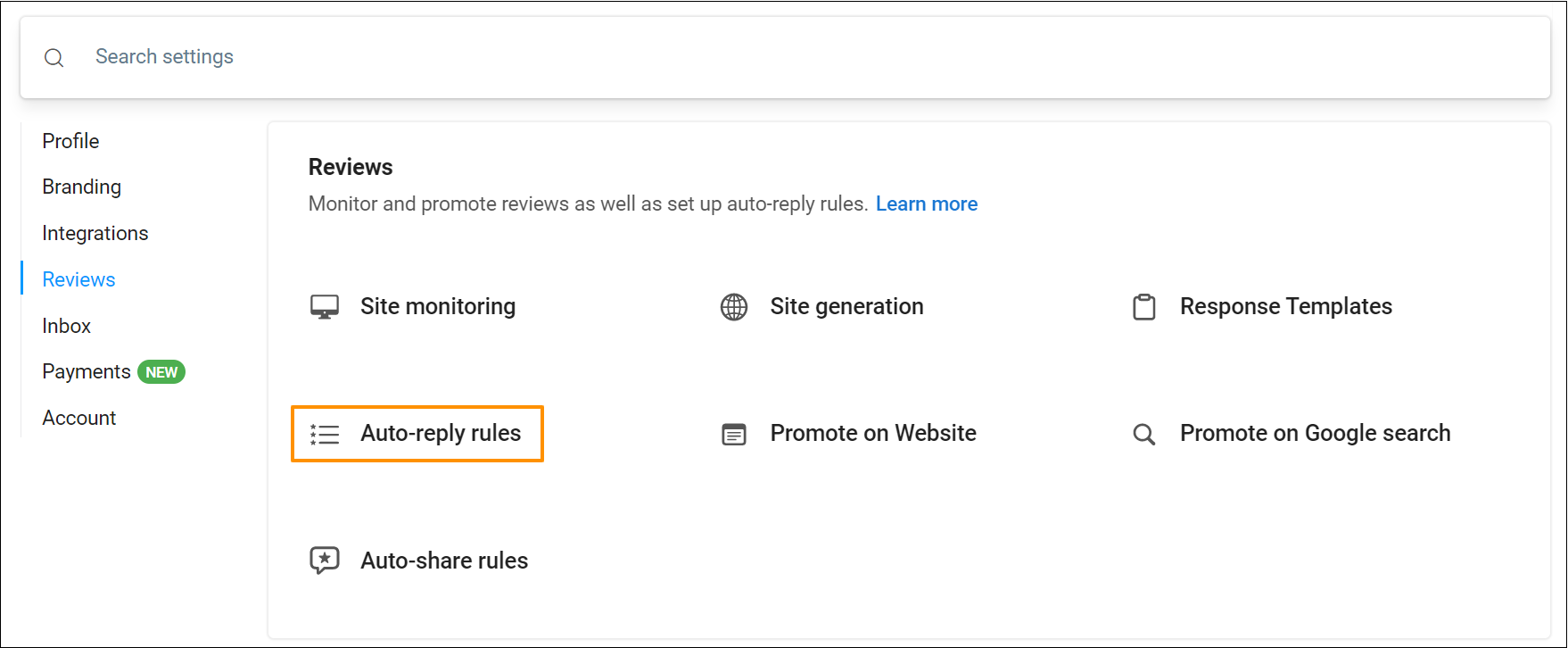
Pricing: BrightLocal publishes location-based pricing. For one active location, Track is $41 per month, Manage $54, and Grow includes reputation features and costs $65 per month or $584 annually. Larger and tailored enterprise packages may be custom.
Main tradeoff: It is a capable local-SEO suite, while response depth, knowledge selection, and customer-recovery workflows are narrower than specialist reputation platforms.
Yext: Best for Enterprise Listings and Business Knowledge
Best for: Large multi-location or regulated organizations that already need publisher coverage, roles, approvals, auditability, and mobile workflows.
Visit Yext Read our Yext review
Yext Generative Response can use review content, entity name, category, and account-level natural-language instructions. A Response Playground helps teams test instructions against positive, negative, edited, and multilingual examples before deployment. Workflow rules can auto-post matching cases or create approval tasks, pairing AI generation with enterprise governance.
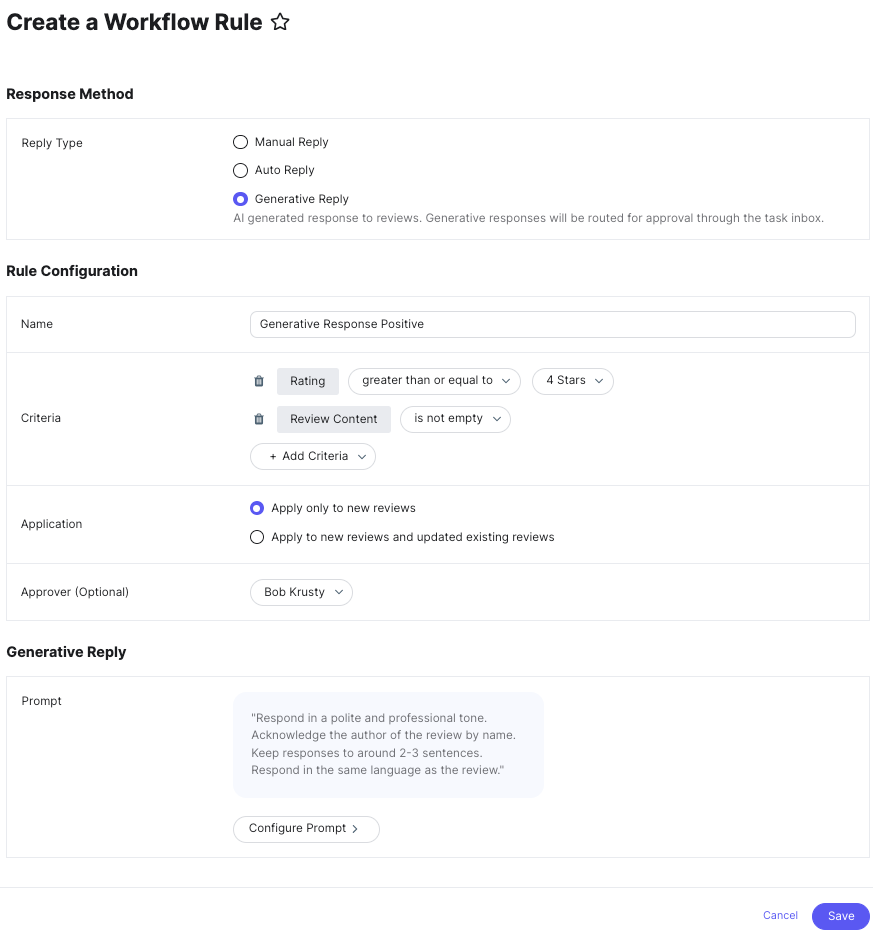
Pricing: Yext uses custom quotes, and Monitoring, Response, and Generation are described as separate packages. Ask the vendor to distinguish reviews from listings, pages, search, social, integrations, and services.
Main tradeoff: Governance is strong, but modular packaging and enterprise setup can be excessive for a single-location team or a buyer focused only on reviews.
SOCi: Best for Distributed Local Marketing Governance
Best for: Franchises and distributed enterprises that want brand-trained response automation with exception handling across a wider local-marketing program.
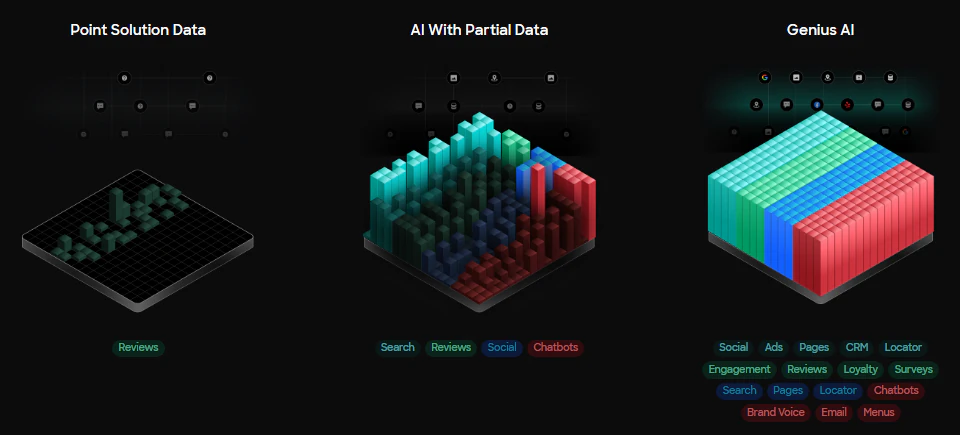
SOCi's Genius Reputation Agent uses review tone, intent, urgency, brand voice, user rules, and escalation triggers to create localized responses, post approved cases, and route sensitive exceptions. Voice of Customer groups semantically similar comments into opinion clusters, while SOCi Shield can block noncompliant user-authored content. This combination addresses both scale and local-brand risk.
Day to day, the brand team can configure voice, compliance, and escalation rules centrally, then let the Genius Reputation Agent draft and post approved routine responses across locations. A sensitive review can be routed as an exception for human handling, while opinion clusters roll recurring comments up for regional or corporate analysis. The payoff is high-volume local execution with centralized guardrails; buyers should verify the exact controls and minimums in the proposal.
Pricing: SOCi uses custom enterprise proposals. Confirm minimum locations, response controls, included modules, implementation, support, integrations, and contract terms.
Main tradeoff: High-volume autonomy is compelling, but public material provides less clarity about small self-service buyers, minimums, and the granularity of controls in a specific proposal.
Uberall: Best for Multi-Location Local Presence
Best for: Global multi-location brands that need multilingual, location-specific guidance and high-volume review management beside listings and local visibility.
Visit Uberall Read our Uberall review
Uberall's AI Bulk Replies can use review text, sentiment, rating, intent, per-location brand guidance, and custom themes to generate individualized responses for a batch. The current workflow requires a person to approve every AI reply, which is a deliberate governance choice rather than fully autonomous posting. Themes and location views help teams identify operational patterns across the estate.
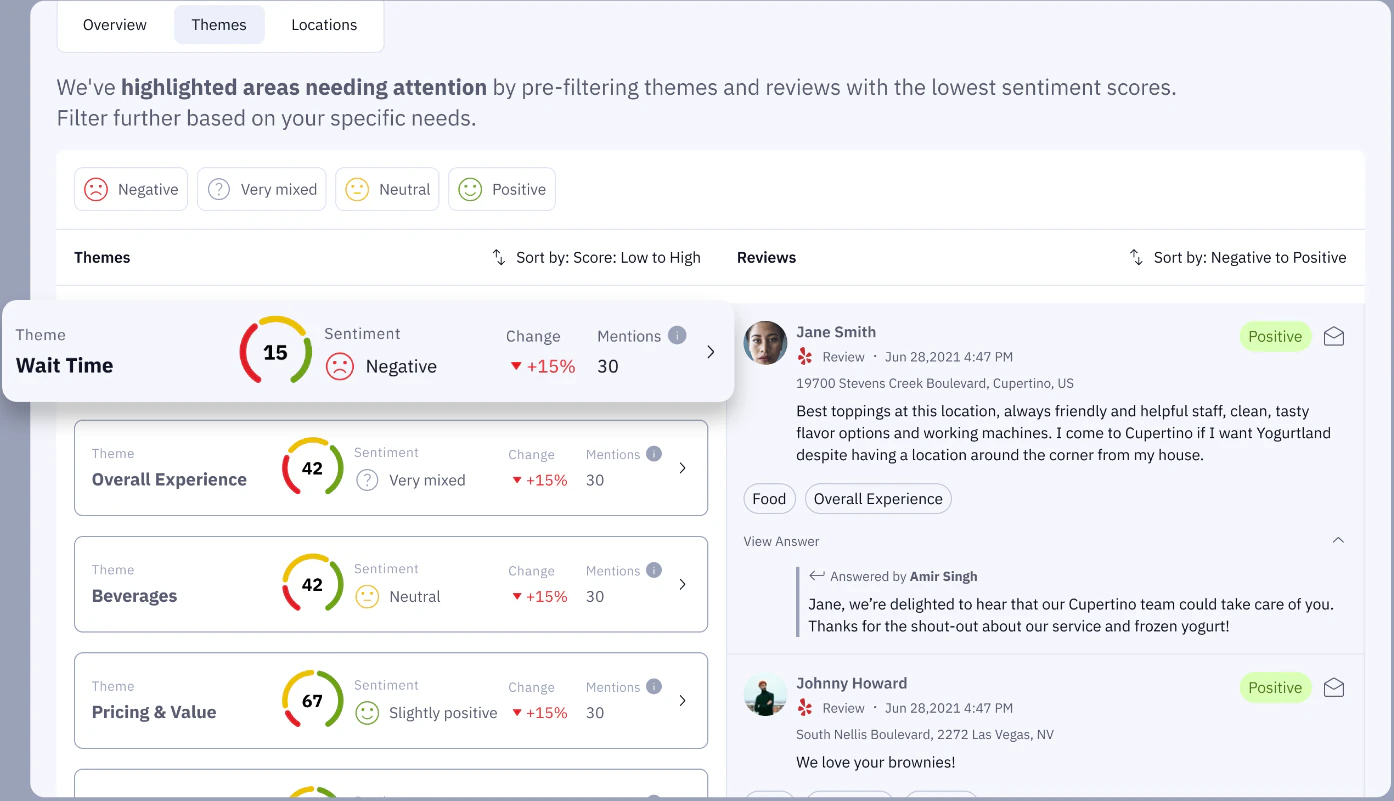
Pricing: Uberall uses a custom proposal. Buyers should separate reviews, listings, social, analytics, integrations, and location governance and confirm what the Stand Out package includes.
Main tradeoff: Per-location voice and mandatory approval suit governance-heavy teams, while buyers seeking autonomous posting retain a human step on every reply.
Innovative and Specialized Platforms Worth Watching
These six products sit outside the established 12-platform consideration set, but lower visibility is not the same as lower value. Each introduces a distinctive use of AI, a focused workflow, or a different operating model that could matter more to a particular buyer than brand recognition or suite breadth.
The goal is not to reward novelty for its own sake. It is to identify where a specialist is trying something meaningfully different and where that difference may solve one important job better, faster, or more economically than a larger suite.
Jump to a specialist: ReviewFlowz Broadly TrueReview Reply Champion MARA Solutions WiserReview
| Platform | What stands out | Published pricing |
|---|---|---|
| ReviewFlowz | Custom reply agents plus review-data access from ChatGPT or Claude through MCP | $45 Pro; $70 Premium per location monthly, billed annually |
| Broadly | An AI Workforce combining reviews with receptionist, lead, web, listings, and social workflows | $799 monthly managed package |
| TrueReview | Review Radar flags possible Google policy violations and tracks manual reports | $49, $99, or $299 monthly; lower effective annual rates |
| Reply Champion | Low-cost Google workflow with response memory, approvals, requests, and intelligence | $10, $50, or $100 monthly by location band |
| MARA Solutions | Hospitality-specific Brand Voice and Smart Snippets for property knowledge | From €60 per property monthly on annual billing |
| WiserReview | Shopper-facing Ask AI answers grounded in a product's published reviews | $9 Starter; $19 Pro; $31 Pro + AI per workspace monthly |
ReviewFlowz: Custom Agents With a Real Prompt Tradeoff
Best for: SaaS, app-store, ecommerce, or multi-location teams that work in Slack, Teams, Zendesk, ChatGPT, or Claude and want broad source coverage.
ReviewFlowz's default AI retrieves similar historical reviews and the business's posted replies by rating and language. Its Custom Agent editor lets an operator write instructions for facts, forbidden phrases, tone, next steps, signature, and language, then test the result. That flexibility is genuinely useful, but it is not automatically better: custom instructions replace the default set of five to ten similar historical review-and-reply pairs with the prompt plus five recent replies. A strong prompt can create precise control; a weak one can reduce personalization. A read-only MCP connector also exposes review data inside ChatGPT or Claude.
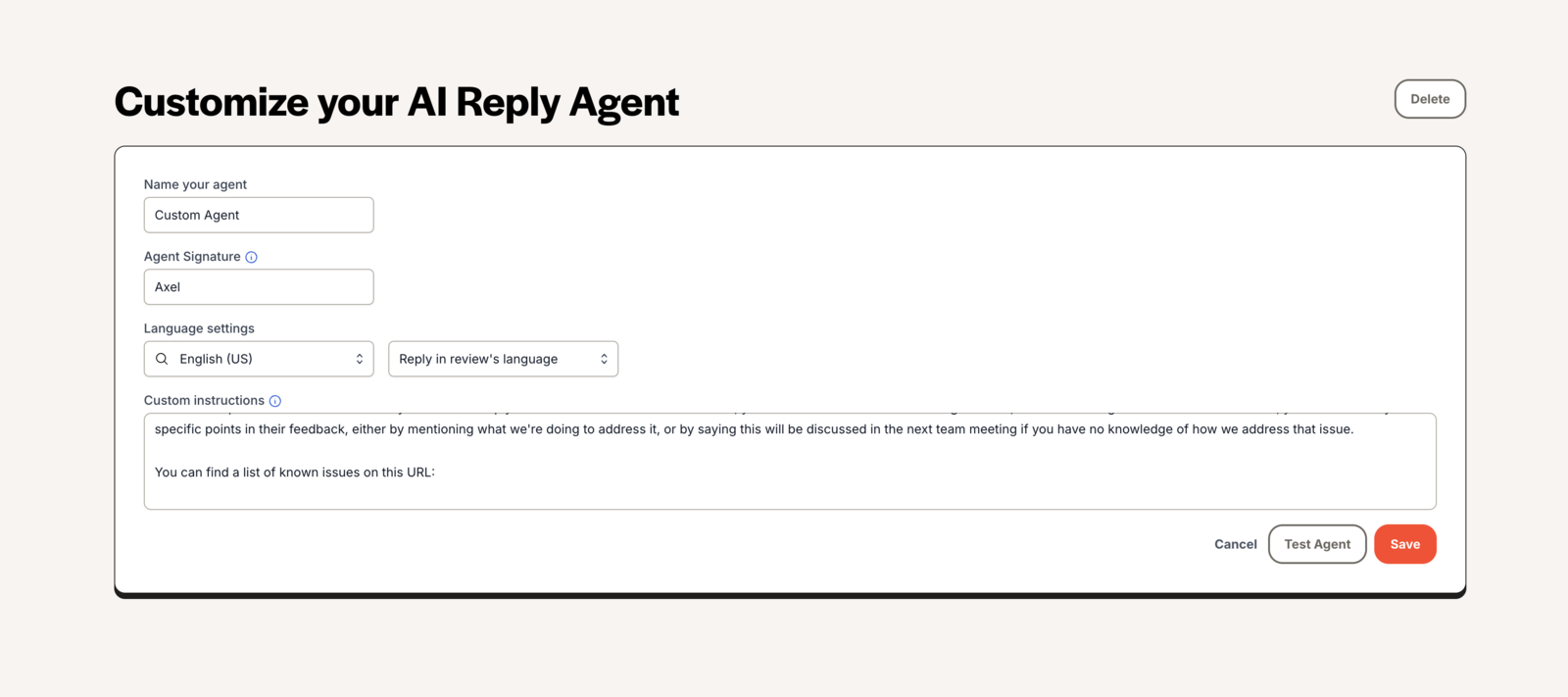
Pricing and limitation: Pro is $45 and Premium $70 per location monthly when billed annually, with enterprise pricing by quote. The operator owns more of the instruction quality than with a tightly governed response system.
Broadly: An AI Workforce Around the Review Workflow
Best for: Owner-operated service businesses that want reviews, receptionist coverage, lead capture, listings, website, and social activity in one managed package.
Broadly's review-reply generation is conventional; the more interesting idea is Broadly Engage's AI Workforce. It uses the business profile, website, FAQs, policies, and supplied knowledge across connected customer interactions, and Broadly emphasizes visibility into why the AI answered, what knowledge it used, and which workflow it triggered. Rules decide which reviews AI can handle and which sensitive cases need approval. That creates a broader operating layer around the review rather than another isolated reply generator.
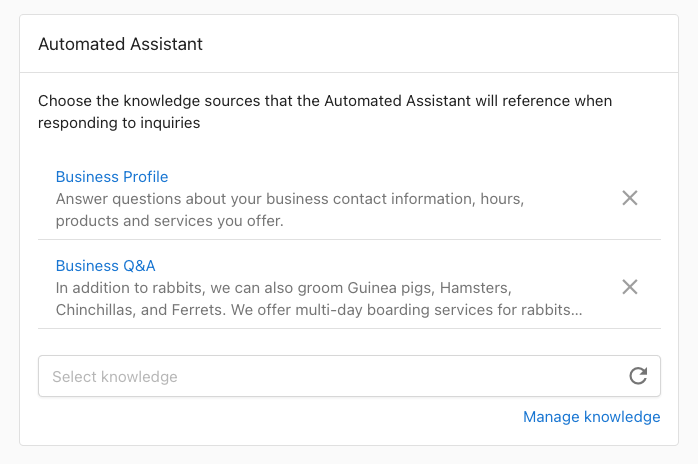
Pricing and limitation: The AI Workforce package is $799 per month with setup, website build, AI tools, listings sync, and support. It can be good value for that bundle and poor value for a review-only buyer; public detail on reply memory and approvals is still relatively thin.
TrueReview: Review Radar for Google Policy Triage
Best for: Local businesses, healthcare practices, franchises, and agencies that need review requests plus practical help triaging suspicious Google reviews.
Review Radar scans incoming Google reviews for possible policy violations, identifies a likely category, explains why it may apply, and tracks the item through Alerts, Reported, and Removed states. The owner still reviews the flag, opens Google, submits the report under the suggested category, and records the status. That division is sensible: AI narrows the work, while Google remains the decision-maker. False positives are possible and the product does not promise removal. Separate reply automation supports tone, language, rating bands, delays, templates or AI, and manual intervention.
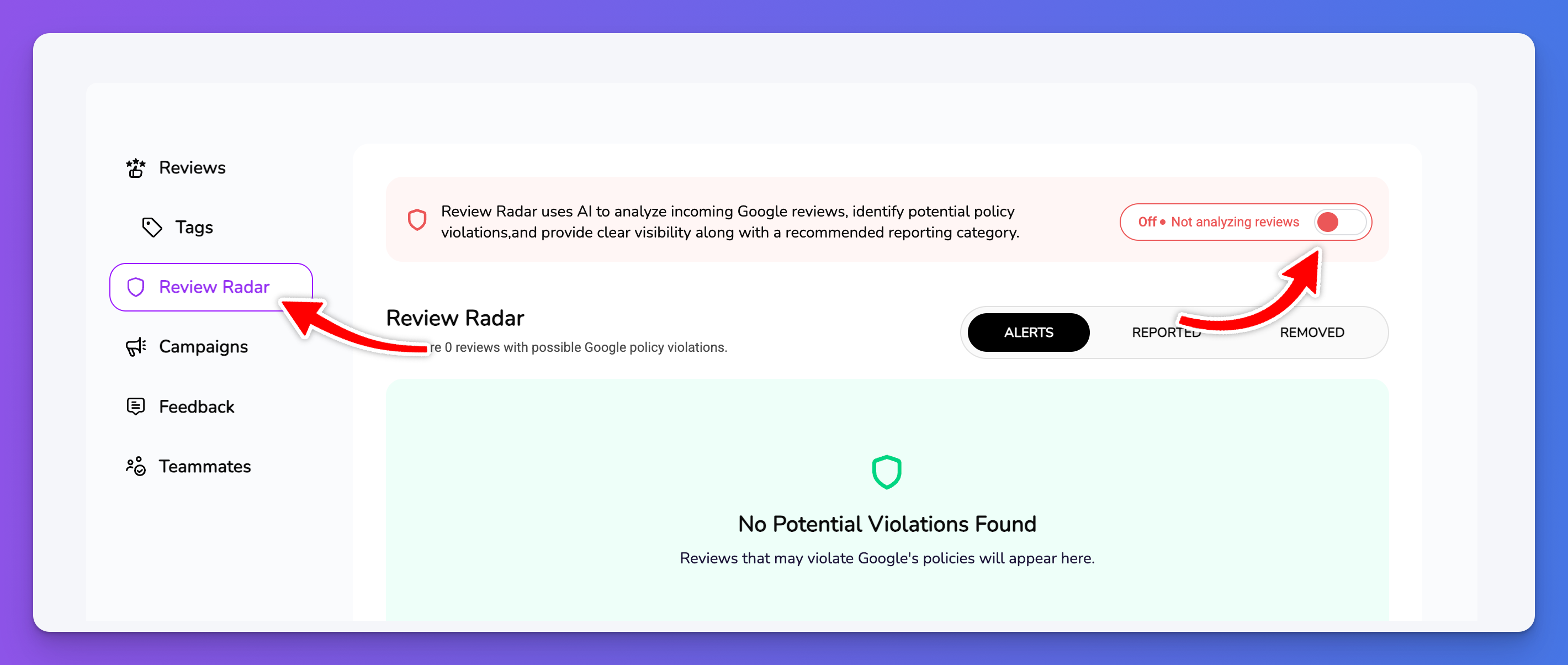
Pricing and limitation: Monthly plans are $49, $99, and $299; annual billing shows effective monthly rates of $29, $59, and $179. Review Radar is Google-specific and assists rather than files the report.
Reply Champion: A Complete Google Workflow at a Low Entry Price
Best for: Google-first owner-led businesses and small multi-location groups that need more structure than a stand-alone reply generator.
Reply Champion's innovation is packaging rather than a novel model. It combines response memory, star-based approval rules, review requests, widgets, and periodic Review Intelligence at the lowest published entry price among the Google-first tools reviewed. Review text, rating, business category, language, tone, recent reply patterns, and compliance mode inform the draft. Sensitive negative, healthcare, legal, refund, privacy, or safety cases can be held for approval, giving a small team a recognizable governance workflow without an enterprise suite.
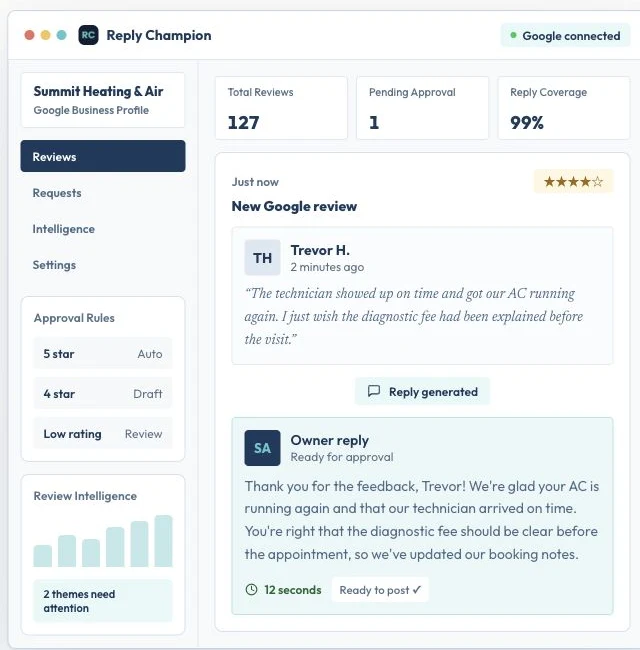
Pricing and limitation: Plans are $10 per month for one to two locations, $50 for three to ten, and $100 for eleven to twenty-five, with custom pricing above that. The scope is intentionally Google-first, not a cross-platform reputation system.
MARA Solutions: Property-Specific AI for Hospitality
Best for: Hotels and hospitality groups managing Google, Booking.com, Tripadvisor, Expedia, Agoda, Airbnb, and other guest-review sources.
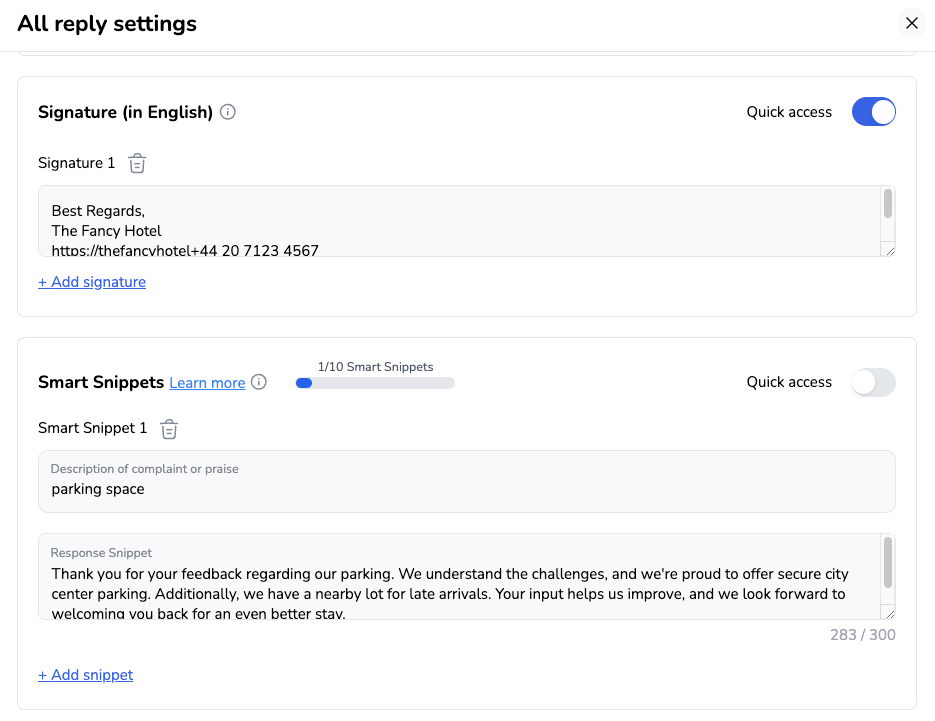
MARA learns Brand Voice from historical replies, while Smart Snippets let a property define recurring topics such as expensive parking or limited vegan breakfast and specify the approved information the AI should weave into a response. The wording varies instead of copying the snippet verbatim. Review text, language, property settings, signature and length, historic replies, Smart Snippets, and optional one-off staff context can all influence the draft. The hospitality analytics add property comparisons, hotel-specific topics, Impact Score, and natural-language review questions.
Pricing and limitation: Published Generator pricing is €60 per property monthly on annual billing or €75 monthly, including 200 replies. Inbox & Analytics shows effective totals of €110 annually or €140 monthly with 500 replies; overages apply. Historical learning can preserve outdated habits unless the property reviews its examples and snippets.
WiserReview: Review-Grounded Answers for Ecommerce Shoppers
Best for: Ecommerce brands with enough product-review volume to support shopper-facing discovery and decision support.
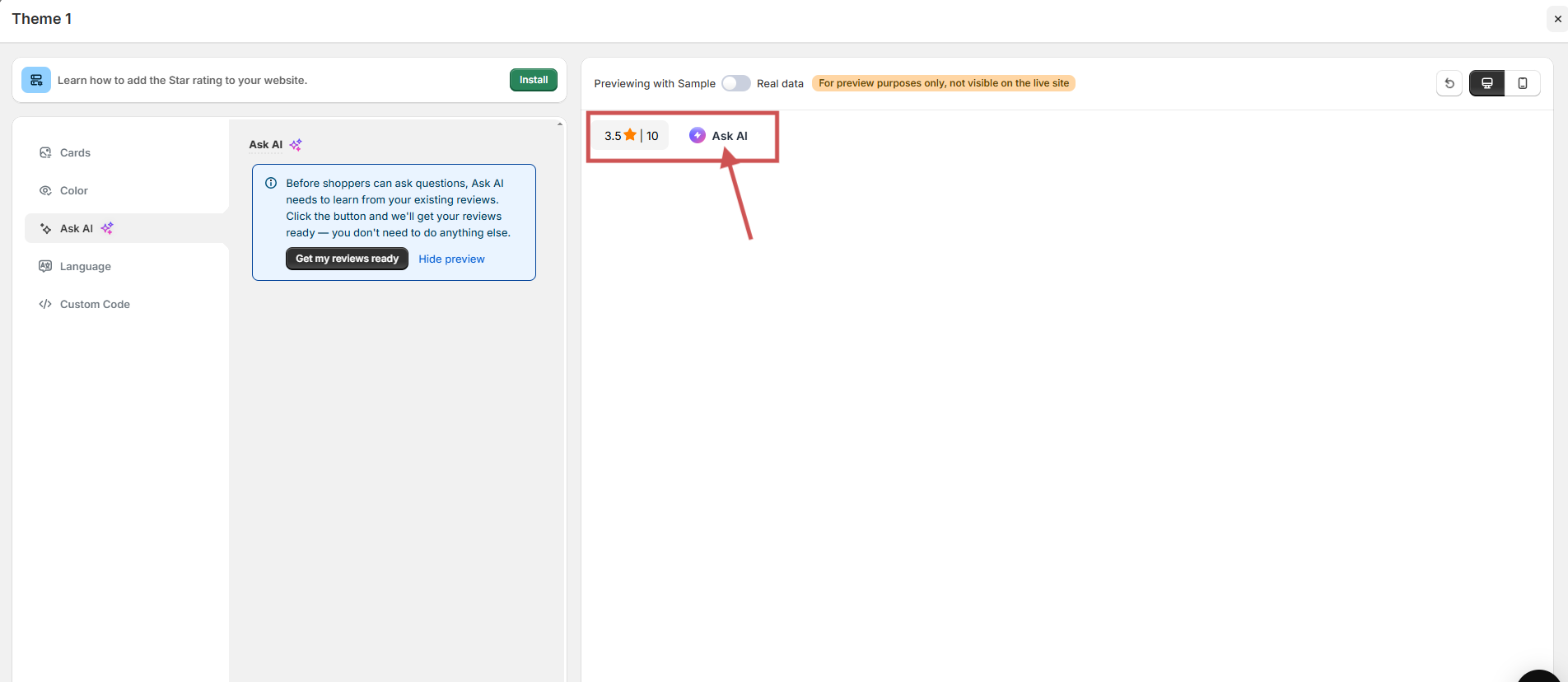
WiserReview's Ask AI reverses the usual workflow: instead of helping the merchant answer the reviewer, it helps a shopper ask a free-form product question. The system searches that product's published reviews, writes a short answer grounded in them, surfaces supporting reviews or topics, and logs shopper questions for the merchant. That can turn an established review corpus into a useful sales and product-discovery layer. The quality still depends on the volume and representativeness of the underlying reviews, and the company does not publish an independent accuracy evaluation.
Pricing and limitation: Displayed pricing is $9 for Starter, $19 for Pro, and $31 for Pro + AI per workspace monthly. Ask AI requires Pro + AI and is narrower than a complete local reputation platform.
How to Choose Review Management Software by Business Type
Small and Single-Location Businesses
Prioritize ease of use, transparent pricing, fast setup, reliable requests, response quality, and a clear view of what customers are saying. RightResponse AI is strong when the business wants all four jobs in one system. NiceJob emphasizes simple automation, Broadly combines reviews with broader communication, GatherUp is strong in acquisition and feedback, and BrightLocal fits a local SEO-led workflow.
Multi-Location and Enterprise Organizations
Evaluate corporate, regional, and local permissions; approved company and location knowledge; approvals; exception routing; rollup and location reporting; integrations; service levels; and contract governance. RightResponse AI, Birdeye, Reputation.com, ReviewTrackers, Yext, SOCi, and Uberall all serve this market with different centers of gravity. Our multi-location review management guide explains the operating model in detail.
Agencies and White-Label Providers
Separate a branded login from a complete agency operating model. Ask about client permissions, branded domains, reporting, billing, account switching, API access, fulfillment, margins, and policy controls. RightResponse AI supports white-label agency delivery, while Grade.us, GatherUp, ReviewTrackers, Vendasta, Synup, and ReviewShake serve different agency models. Review our white-label reputation management service when outsourced fulfillment is part of the decision.
Specialized Industry or Channel Workflows
Hospitality teams may need Tripadvisor, Booking.com, Expedia, multilingual responses, and property-level analytics. Ecommerce teams may need product reviews, visual UGC, syndication, widgets, and verified-buyer workflows. Healthcare, financial services, senior living, and legal organizations need privacy, sensitivity, and escalation controls. A category leader can still be a poor fit when its sources, workflows, or safeguards do not match the industry.
Pricing and Contract Questions to Ask
Headline price rarely tells the whole story. A $10 per-location plan and a large custom enterprise proposal may include very different modules, usage limits, integrations, service levels, and implementation work.
- What is included? List the exact review sources, locations, users, requests, responses, messages, analyses, competitor scans, and rank scans in the proposal.
- What grows with usage? Ask how review volume, messages, contacts, locations, users, AI usage, storage, and reporting affect the cost.
- Which features are add-ons? Confirm listings, surveys, social, widgets, competitor analysis, map rank tracking, API access, white-labeling, and advanced analytics.
- What does implementation cost? Include onboarding, data migration, integrations, custom configuration, training, and managed services.
- What are the contract terms? Review minimum locations, annual commitments, renewal increases, cancellation, data export, downgrade rights, and support levels.
- Can the vendor prove the workflow? Ask for a demonstration using a real positive review, a sensitive negative review, a location exception, and an operating insight that needs an owner.
A Practical Implementation Checklist
The best platform still fails when the rollout is vague. Build the first 30 days around real workflows and measurable outcomes.
- Connect and verify sources. Confirm every location, review source, user, permission, and integration before automation begins.
- Define request moments. Choose the events, channels, timing, personalization, reminders, and ownership that fit the customer journey.
- Build approved knowledge. Document brand messages, company facts, location facts, restricted claims, escalation rules, and sensitive scenarios.
- Customize analysis. Define the categories and topics that match the business, then test whether teams can trace a theme back to source reviews.
- Establish a competitive baseline. Record current ratings, volume, velocity, response activity, customer themes, and local visibility for each location and key competitor.
- Measure action. Track request conversion, response coverage and time, topic movement, location outliers, competitor movement, and whether assigned issues recur.
Evaluate review management with your own reviews
Use real customer language to test requests, response quality, topic intelligence, competitor context, and local visibility before choosing a platform.
Frequently asked questions
What is the best review management software in 2026?
RightResponse AI is our top overall choice for businesses that want review requests, knowledge-informed responses, customer intelligence, competitor analysis, and local visibility in one system. Birdeye, Reputation.com, SOCi, Yext, and Uberall are strong enterprise options. Podium is a strong fit for text-led customer communication, while NiceJob, GatherUp, Grade.us, and BrightLocal serve narrower small-business, agency, or local SEO needs.
How much does review management software cost?
Published entry pricing in this guide ranges from $10 per location monthly plus usage credits for RightResponse AI PAYGO to $799 monthly for Broadly's bundled AI Workforce. Many published small-business plans fall between about $45 and $125 monthly; Podium is commonly reported to start near $399 monthly, while several enterprise platforms use custom proposals. Compare billing cadence, locations, usage, modules, implementation, integrations, support, add-ons, and contract terms before comparing headline prices.
What features should review management software include?
A complete platform should help a business get reviews, monitor and respond to them, understand patterns in review text, and compare performance with competitors. Multi-location teams should also evaluate permissions, approvals, escalation, location knowledge, rollup reporting, integrations, and audit history.
Which review management platform generates the best review responses?
RightResponse AI is our top choice for businesses prioritizing response quality, brand accuracy, and marketing value. Many platforms generate replies from review text, ratings, and tone settings. RightResponse AI instead uses a multi-step agentic process that evaluates the review, retrieves approved company and location knowledge, selects key marketing messages based on relevance and fit, drafts the response, and applies quality and escalation checks. Among the platforms examined for this guide, we did not find another publicly documented workflow combining those steps in the same way. Key messages are used only when they contribute naturally to the response. Because RightResponse AI publishes this guide, buyers should compare platforms using the same real reviews and sensitive scenarios.
What is the best review management software for a small business?
RightResponse AI is a strong fit when a small business wants a complete system with transparent entry pricing. NiceJob is strong for simple request and referral automation, Broadly for broader customer engagement, GatherUp for review acquisition and feedback, and BrightLocal for local SEO teams that also need review tools.
What is the best review management software for multiple locations?
RightResponse AI, Birdeye, Reputation.com, SOCi, Yext, Uberall, and ReviewTrackers all support multi-location work. The best choice depends on whether the organization prioritizes review depth, broad local marketing, enterprise governance, customer intelligence, listings, or a combination of these needs.